📸 SNAPSHOT - Issue 101
Welcome to a brand new Issue of my Magazine. A truly brilliant one, enjoy the read :)


In this Issue
Laowa’s 90mm Macro For Micro Four Thirds

Laowa has released a Micro Four Thirds version of its 90mm f/2.8 2x Ultra Macro APO lens, bringing the lens to OM System and Panasonic camera users. The lens has been available for full-frame mirrorless systems for a few years, and this update now extends its compatibility.
The 90mm f/2.8 2x Ultra Macro APO originally launched in 2022 for Canon RF, Nikon Z, Sony E, and L-mount cameras. It was one of several 2:1 macro lenses in Laowa’s lineup, reflecting the company’s ongoing focus on close-up and ‘specialty’ lenses.

On Micro Four Thirds, the lens behaves differently than it does on full-frame. Because of the smaller sensor and 2x crop factor, its maximum 2:1 magnification effectively becomes 4:1 relative to full-frame. That places it in the extreme macro category, where it can be used to capture very small subjects and fine surface details that are difficult to record at lower magnifications.
The Micro Four Thirds format is already widely used for macro photography, in part because of the system’s compact camera bodies and features such as in-body image stabilisation and focus stacking. Cameras from OM System and Panasonic are often chosen for this kind of work, so the addition of another high-magnification macro lens fits naturally into that.

Optically and mechanically, the lens is unchanged apart from the mount. It uses a 13-element, 10-group optical design with an apochromatic layout intended to control both longitudinal and lateral chromatic aberrations. The lens has a nine-blade aperture diaphragm and relies on manual focus, which is typical for lenses designed for high-magnification shooting. An internal focusing design keeps the lens length constant throughout the focusing range.
The lens weighs 540 grams (19 ounces), which is relatively substantial for Micro Four Thirds. Though, to be fair for close-up work, the added weight may be less of an issue, as the lens is often used on tripods or support systems anyway.

Unlike some earlier Laowa macro lenses, this version includes electronic contacts. These allow aperture control through the camera body and ensure that EXIF data is recorded.
The Laowa 90mm f/2.8 2x Ultra Macro APO for Micro Four Thirds is expected to be available in late February. Pricing is set at $499, the same as the versions for other mounts.
A few sample shots:


Learn The Art Of Photography

Get full and free access to my Creator University - The World’s Best Online University for Photographers & Creatives: Get access to hundreds of amazing photography courses, learn from professional photographers, connect with students and much more!
Interview with Da Frames
This week’s Interview with Da, a talented photographer from Montreal, Canada. I am truly honoured to have had the opportunity to interview him!
You can find him on Instagram as: @da_frames
Enjoy the amazing Interview ;)

Can you tell us a bit about yourself?
I’m a photographer born and raised in Montreal, Canada. My goal has always been to travel and show different parts of the world through my own visual language. I’m not trying to document locations exactly as they are. I want to translate how they feel. I want to present places in a way that feels cinematic and immersive, like a video game. Photography, for me, is about taking something familiar and giving it a slightly unreal edge without losing its identity. Montreal is where I started, but it’s not where I want to stop.
How did you first get into photography?
Photography started for me through inspiration. I spent a lot of time looking at work from photographers who were shooting landscapes, cityscapes, street scenes. What really pushed me was seeing how different people could take the same place and turn it into something completely personal. That made me want to do the same. I didn’t start with the idea of becoming “a photographer.” I started with the idea of creating images that felt like scenes from a movie or like I said a video game.

What are your favourite shooting conditions?
I honestly enjoy all conditions, but rain and snow are where my work really comes alive. Weather adds atmosphere without me having to force anything. Snow adds contrast and silence, especially in places like Kyoto where architecture and weather interact beautifully. Clear sunny days are fine too, but they don’t excite me the same way. Harsh or moody weather instantly gives depth to a scene. It turns something ordinary into something cinematic.
What is your favourite photography location right now?
Kyoto, without hesitation. The city has a very special atmosphere. The combination of traditional architecture, narrow streets, temples, and changing weather makes it visually powerful. Kyoto feels timeless, especially early in the morning or during rain and snow. Every corner feels like it belongs to a different era. That said, Montreal is still very important to me. I have plans to share more work from there soon, and I already have a strong concept in mind.

What does photography mean to you?
Photography is about translating what’s in your head into something others can see. Everyone has a vision, but not everyone takes the time to develop it. For me, photography is the tool that allows me to show how I interpret the world. Sometimes that works immediately, sometimes it takes many attempts. What matters is the intention behind the image. If I can look at a photo and say it represents what I had in mind, then it did its job.
What gear do you use?
I shoot with a Sony a6000 paired with a 24–75mm f/2.8 lens. It’s a simple setup, but it gives me everything I need. I don’t believe you need the most expensive gear to create strong images. What matters is how well you know your equipment.

Do you prefer busy streets or quieter spaces?
I prefer quieter spaces. They fit my personality and the mood I want my photos to have. You can focus on a single subject, a building, or a light source without overload. Busy streets can be interesting, but they often pull attention in too many directions.
Can you walk us through your editing process?
I edit with the final mood in mind before touching any sliders. The first thing I focus on is exposure and contrast, making sure the image has depth without losing detail. After that, I work on color balance. My edits are heavily influenced by film, games, and cinematic color grading, so I’m careful with tones. I usually push warmth or coolness depending on the scene.

How do you decide which moments to capture?
I’m very patient. I don’t spray and pray. I wait for the frame to come together. Composition is everything for me. The angle, subject placement, background, and light all need to align. If something feels off, I don’t take the shot.
Favourite photography techniques?
Slow shutter speed is one of my favourites. Having a still subject surrounded by movement creates contrast and energy. It adds a story without needing multiple elements. It’s especially effective in cities like Tokyo, where crowds and light are constantly moving.

How did you find your unique style?
My style comes directly from fiction, movies, and video games. I’m always thinking in scenes rather than photos. Matching that fictional atmosphere with real-world locations is what defines my work. I encourage more photographers to experiment this way instead of sticking to safe formulas.
How do you see yourself as a photographer?
I see myself as a cinematic street and urban photographer. I focus on architecture, atmosphere, and people as elements rather than subjects.

Black and white or colour photography?
I haven’t shared black-and-white work yet. Color plays a huge role in my images, especially with lighting and mood. When the time feels right, I’ll explore it.
What’s the most challenging thing about photography for you?
The most challenging part for me is constantly raising my own standard. Every time I post a new image, I want it to feel stronger than the previous one. That mindset can be exhausting, but it’s also what pushes me forward. When you start developing a clear style, it becomes harder to surprise yourself. You know what you like, you know what works, and suddenly the bar is higher. I’m very critical of my own work. I don’t settle easily, and I often reshoot scenes in my head after the fact, thinking about how they could have been better.

Can you walk us through a typical shooting day?
I usually have a mood or scene in mind before I even step outside. Once I’m out, I walk slowly and stay observant. I’m constantly looking for angles, light direction, and how the environment is behaving. If a location feels promising, I stop and wait. I visualize the frame before taking the shot, where the subject will stand, how the background will balance, where the light will fall. I’d rather take five thoughtful shots than fifty random ones.
What is your favourite subject to shoot?
Cars and city environments are my favorite subjects because they naturally carry character and presence. Cars, especially, feel like beautiful to me. They add motion, and often say something about the place they’re in. Cities, on the other hand, are endless sources of atmosphere. Architecture, streets, weather all work together to create scenes that feel cinematic without needing much interference.

Do you listen to music during your creative process, and how does it influence you?
Music is a big part of my creative process. I never shoot or do anything in silence. The music I listen to directly affects my creative process. Every image I post is connected to the music I was listening to at that moment, which is why I often share tracks alongside my photos. Music helps me lock into a certain mindset and maintain consistency throughout.
Who are some photographers or other artists that inspire you?
These days, inspiration doesn’t come from photographers as much as it does from movies and video games. That’s where most of my ideas come from. Films and games are very intentional in how they create atmosphere and I apply that thinking to my photography. I’m not trying to replicate specific scenes, but I do study how that atmosphere is built visually.

How do you know when you’ve nailed the shot? Is it instinct or something else?
It’s instinct, backed by experience. When I look at an image and immediately feel that nothing needs to change, I know it worked. The composition feels balanced, the subject sits exactly where it should, and the mood matches what I envisioned. There’s no second-guessing.
How important is composition in photography?
Composition is everything in my work. It’s the foundation of how I shoot. Every element in the frame has a purpose. Nothing is accidental. I honestly spend more time adjusting my position than adjusting camera settings.

What’s your advice for someone who wants to start exploring photography?
Photography isn’t a competition. That’s the most important thing to understand. Everyone sees the street differently, and that’s the point. If you have a vision, follow it, even if it doesn’t fit what’s popular. Progress takes time, and there’s no shortcut. You build confidence step by step by shooting consistently and learning from mistakes. Don’t rush to define yourself. Experiment, observe, and allow your style to develop naturally.
How important is lighting in photography?

The rest, 5 more questions of this Interview + an additional exclusive photograph selection, are for Premium subscribers only.
Lux’s Upcoming Halide Mark III

Lux, the team behind the well-known iPhone camera app Halide, has opened a public preview of Halide Mark III. This isn’t a full release yet, but it does give us an early look at where the app is headed. Along with that preview, Lux has revealed a major new concept coming to the next version of Halide, something it calls “Looks.”
Halide Mark II launched about five years ago and brought a major redesign, improved RAW capture, and a long list of changes. Since then, Mark II has continued to evolve, most recently with the introduction of Process Zero in mid-2024. That feature stood out because it deliberately avoided AI and computational photography, aiming instead for photos that feel closer to what the camera sensor actually captures.

Halide Mark III builds directly on that idea. Two new Looks are part of this early preview, starting with Process Zero II. This updated version expands on the original by adding HDR support, compatibility with Night Mode, and the option to use Apple ProRAW. Those additions address some of the biggest limitations of the first Process Zero, which was intentionally stripped down.
Process Zero II still avoids AI and computational tricks, but it is a bit more flexible. Lux says the updated engine produces more vivid and realistic results while staying restrained compared to Apple’s default camera processing. It also introduces tone adjustments, giving photographers some ability to recover highlights and shadows that were previously lost.

Apple ProRAW default appearance

ProRAW with Process Zero II
The second new Look is called Chroma Noir, and it is based on a new Film Engine that Lux has been developing in the background. According to the company, this engine grew out of a multi-year effort to study what gives analog photography its particular feel. Chroma Noir is the first example of that work, presenting a black-and-white mode that mixes modern sensor data with a more textured, film-like rendering.
Interestingly, Chroma Noir works with HDR by default, which sounds counterintuitive but is optional. Users can disable HDR or even turn off the film simulation itself, leaving a cleaner black-and-white mode underneath.

Chroma Noir example

Chroma Noir example

Chroma Noir example
This preview is only an early step toward the full Halide Mark III release planned for later this year. Lux has already said a new interface, additional Looks, and other features are still in development. The Looks themselves are being created with input from Cullen Kelly, a colorist and image scientist who has worked on Oscar-nominated films and projects for HBO, Netflix, and Apple.
For now, existing users can try the Halide Mark III preview by tapping the “3” icon inside the Halide Mark II app. The final version of Mark III will be available to current Halide subscribers and anyone who previously purchased Mark II. Pricing remains unchanged, with subscriptions starting at $19.99 per year or a $59.99 one-time purchase.
Photography Tip of the Week


The weekly photography tip is only accessible to Premium Subscribers of The Magazine For Photographers.
Photo Analysis
Welcome to the part of the Magazine Issue where we take a closer look at a photo and analyse it so that you can learn and better your own photography from it ;)
Photo by: @mo_ayra

Let’s Analyse this Photo
Composition & Framing
What works well:
Our subject is placed perfectly within the orange block, and your eye lands there immediately → partly because the man is in that sunlight patch (your eye instinctively goes where the light is), but also because of the fact that the he is dressed in all black → this makes him separate cleanly from the wall and he immediately becomes readable (he literally ‘pops’ out)
The lamp shadow above the man acts as an extra framing element, which is a really nice touch. It sort of boxes him in and creates a ‘frame in a frame’.
The diagonal shadow on the blue wall adds tension and energy, keeping the shot from feeling flat.
The clean and immediate separation of colour fields creates a very interesting and distinct look.
What could be better:
The red balcony and the yellow pole in the middle (on the right next to the man (almost neon yellow) feel a bit unnecessary. Once you notice them, they slightly break the minimalist flow and steal a bit of attention. This could have possibly been solved right on location by shifting position just a bit, but that is always a tricky trade-off/tough call to make → move too much and you introduce new problems, here in this photo for example → the big pole on the right (in the shadows) cutting into the blue area.
The dark bottom section takes up quite a bit of space without adding much compositionally. A small crop could tighten things up.
Light & Atmosphere
What works well:
As touched on before, the light itself is doing a great job of carving out a little stage for our subject. Feels very much like a spotlight moment.
The deep shadows actually do work in favour of the mood here. Yes, they hide detail, but that feels intentional/is the intended vibe → it keeps the photo graphic and focused.
What could be better:
The light is pretty hard and contrasty. That is again part of the look, but it leaves zero room for subtle transitions. A slightly softer edge could have added nuance without killing the vibe.
Colour & Tone
What works well:
Colour is probably the very first thing that you notice (me at least). That orange and blue combo is very bold and really satisfying to look at, especially because most of the rest of the scene sits in shadow.
The dark clothing of the man works perfectly with the palette, keeping him coherent (the background separation does the job anyway).
What could be better:
The saturation is quite strong. It works here, but it leaves little room for subtle colour variation and it might look too ‘artificial’ for some people.
The black areas are very crushed. A tiny lift could add depth without ruining the graphic look.
Emotion & Story
What works well:
The photo definitely feels more about mood, form, design etc. than classic storytelling.
The man walking adds a touch of life and scale, stopping the photo from becoming purely abstract.
What could be better:
We do not really connect with the person on an emotional/intimate level. There is no readable expression or gesture to latch onto.
Storytelling is minimal, the subject feels more like a visual element than a character. Whether that is a flaw or not, depends largely on the intent of the photographer, here it works.
Balance
The image is well balanced overall, despite the dark areas.
The man anchors the orange section nicely and prevents it from overpowering the frame.
The diagonal shadow, on the blue wall, balances the vertical elements and adds visual tension.
As mentioned, some small elements (the yellow pole, red balcony) slightly disturb the balance, but not enough to break the shot.
Explore The World’s Best Photography Locations
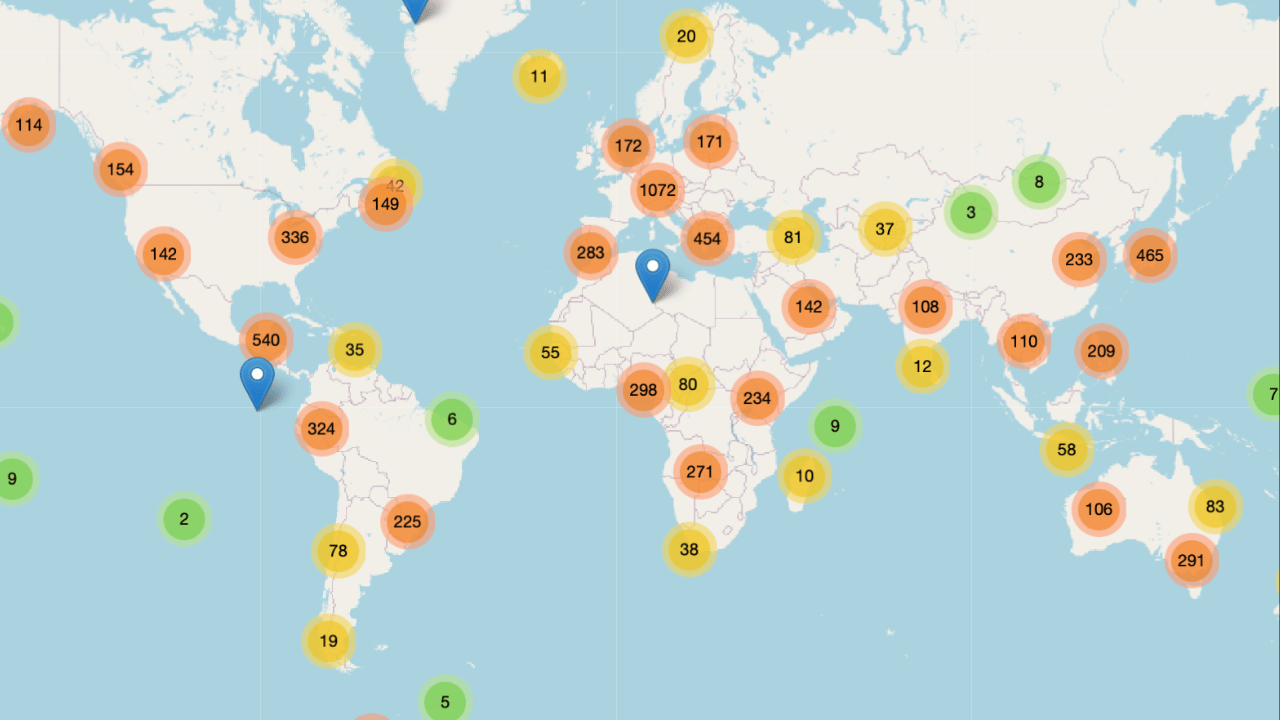
Get access to the world’s best photography location map - explore tens of thousands of amazing photo spots across the globe!
Photographer of the Week
Photographer of the week goes to: Alex Corvin
You can find him on Instagram as: @alexcorvin.gallery
A few photos of his (along with a few words):
"We often leave somewhere to get to somewhere else, but do we remember what happens in between? Do we recognize all the other stories around us? These are the moments people may not often pay attention to, moments we would normally consider mundane. Photography continues to show me that there’s just as much beauty in these moments when we view them through a different lens." -Alex Corvin


The Rest of this Issue is for Premium Subscribers
