📸 SNAPSHOT - Issue 102
Welcome to a brand new Issue of my Magazine. A truly brilliant one, enjoy the read :)


In this Issue
Viltrox’s New AF 16mm f/1.8 L Lens

Viltrox has officially shown off its first autofocus lens for the L-Mount system, the AF 16mm f/1.8 L. It is an ultra-wide full-frame prime that L-Mount users may already recognise, since the same lens has been around on other mounts for a while now.
Viltrox joined the L-Mount Alliance last September and said autofocus lenses were coming, so this is the first sign of that promise turning into an actual product. It gives photographers using Leica, Panasonic, or Sigma L-Mount bodies another wide-angle option that is not coming from a first-party brand.

As mentioned, the AF 16mm f/1.8 itself is not new. It originally launched for Sony E-mount in 2023 and later arrived for Nikon Z. That lens helped change how a lot of people looked at Viltrox, showing that the company could deliver solid optics without feeling like a compromise. The L-Mount version sticks closely to that same formula.
Optically, nothing has changed. The lens offers a very wide 105.6-degree field of view and uses 15 elements in 12 groups, including three aspherical and four ED elements. Viltrox says this keeps distortion and chromatic aberration under control, even when shooting wide open. It also claims good coma correction, which matters if you are planning to use the lens for astrophotography.

Autofocus is handled by Viltrox’s STM stepping motor. It is designed to be quiet and smooth, especially for video, and the lens supports face and eye detection on compatible L-Mount cameras. Viltrox also says focus breathing is kept to a minimum, another small but important detail for video shooters.
Physically, the lens will feel familiar if you have used the E- or Z-mount versions. There is a small colour display on the barrel that shows things like focus distance, aperture, and depth of field. You also get two customisable function buttons, an AF/MF switch, and a de-clickable aperture ring. The lens is weather-resistant and takes 77mm filters, which is pretty standard for a lens in this class.

The Viltrox AF 16mm f/1.8 L is available for $580.
A few sample shots:


Join Our Photographer Group!

Get access to the best photographer group/community for networking, collaborating, gear talk, feedback on your work and so much more!
Interview with Peter Rask
This week’s Interview with Peter, a talented photographer from Denmark. I am truly honoured to have had the opportunity to interview him!
You can find him on Instagram as: @piet.no.1
Enjoy the amazing Interview ;)

Can you tell us a bit about yourself?
Cheers everyone, my name is Peter. I’m originally from Denmark and I’ve been living in Tallinn for the past six years. Moving here wasn’t part of some grand plan, but it ended up shaping both my life and my photography more than I expected. Tallinn is quiet compared to many capitals, especially outside the tourist areas, and that slowness seeps into how you move and how you observe. Over time, I’ve come to appreciate that pace. I don’t come from a background where I felt an urgent need to define myself as a photographer early on. Instead, photography slowly became part of my life as I settled into new surroundings and routines.
How did you first get into photography?
I grew up in a family where both my father and brother were deeply involved in photography, but for a long time it didn’t really register with me. It felt like their thing, not mine. That changed during a 30-day trip to India, when I was offered a Fuji X100T to take with me. Somewhere along that journey I realized that making images lit a spark I hadn’t found elsewhere - a creative impulse I’d been searching for without knowing how to name it. Photography didn’t feel inherited in that moment, it felt discovered.

Why street photography?
Street photography felt natural because it’s where I first experienced photography as something meaningful. Walking through the streets of India and reacting to spontaneous, often random moments gave me something real to hold onto. There was no intention behind it and no idea of genre - it was simply the first way I ever took photographs.
What are the best/your favourite photo locations in your city and why?
Hmm it’s tough to come up with a favorite in Tallinn. The city is quite small for a capital and I would say it depends more on the weather conditions where I go shoot. I like my ground point to go from the freedom square in the center though.

What does photography mean to you?
Photography, to me, is first and foremost about freedom - the freedom to create and to respond intuitively to what’s around me. But it’s also something I’ve learned to respect. You can always see when the passion is missing - good images don’t come from half-hearted effort. Earlier this year I had a back injury that forced me to slow down. During recovery, the weather outside was exactly how I like it - foggy and dim - and after weeks of mostly lying down, I decided to go out shooting again. Physically, I was very limited. I couldn’t move the way I usually would, and that made me realize how demanding street photography actually is, and how precise you become chasing a moment that disappears almost as quickly as it appears. When you rush to get a shot and everything suddenly aligns in the viewfinder, that feeling is hard to replace. It’s rewarding - and slightly addictive.
What gear do you use?
I use fujifilm. Currently I’m using an X100Vi and an XT5 with the 56mm 1.2 lens.

Do you prefer shooting in the chaos of a busy street or in quieter, more intimate spaces?
When I first started shooting street photography, I was all over the place. I loved capturing anything that moved, and I never aimed for anything specific. Over time, I found a style I connect with, and now I try to bring that sensibility into my frames. Sometimes I do revisit locations I’ve noticed before, waiting for a moment I pictured in my head. I tend to focus on a single person in the frame, which supports a minimalistic approach and creates a subtle connection to that isolated figure. It gives the image balance and a quiet intimacy, even in a busy environment.
What are your favourite shooting conditions?
I like all weather but my favourite conditions are no doubt foggy. I experienced it first time when I was in Vietnam in 2020. When the low clouds drifted in to a neon filled city a cold evening my jaw simply dropped. It was quite a sight. That encounter changed my direction on what I like to shoot.

How do you decide on what moments to capture and which ones not? Or do you just shoot everything?
Over the years, you naturally become more selective about what you want to include in your work. It can be frustrating - if a scene is promising, it only feels right when all the elements come together, and I’ve spent hours just waiting for that to happen. I also sometimes “follow” interesting subjects, in a very respectful way, especially people with striking clothes or appearances. It’s not about forcing a shot, but about noticing moments that feel alive and worth showing.
Colour or Black and White?
I’m definitely a color guy. It’s very rare I dare to play with BnW. Something I want to perceive more of in the future perhaps.

What’s the most challenging thing about photography for you?
The most challenging thing for me is maintaining the passion. The last couple of years have been tough in terms of keeping the drive to create. Life, fortunately, teaches you lessons in ways that don’t always involve photography, and for me, it’s been my own journey outside of the camera that sometimes put a pause on my work.
Do you listen to music during your creative process and if yes how do you think it influences you?
When I shoot I like to use all my senses. Focus is key. Sounds around you is an important factor plus you also have to watch your back due to traffic.

Who are some photographers or other artists that inspire you?
This question is great cause over the years I have noticed a tendency amongst photographers. I don’t really buy into the idea that inspiration has to come from iconic names. Photography has a bit of an ego problem in that way. Most of us are influenced by our peers, by people we discover online and by things we see casually rather than in history books. And that’s completely fine. Nothing remains unique for very long anyway - images get repeated, refined, and sometimes detached from their origin. What matters more to me is how honestly you engage with that process.
How do you know when you’ve nailed the shot? Is it instinct or something else?
I think you just know. There’s this feeling of chasing something and finally getting it, and then that moment when you shoot something and are genuinely surprised by the result you got. Slow shutter shots can create those “wow” feelings - for me, at least.

How important is composition in photography?
For me, composition is everything - it separates the wolves from the sheep I’m not really an “order” kind of person, so I don’t strictly follow rules like the rule of thirds. I often place my subject dead center, which traditional photography advice usually frowns upon, but for my style it just works. Composition isn’t about following rules blindly, it’s about finding what feels right for the image and for the story you want to tell.
What’s your advice for someone who wants to start exploring street photography?
Start by shooting whatever grabs your attention, and let your curiosity lead the way. The key is to find joy in the act of photographing - if you’re passionate, improvement comes naturally. Street photography isn’t complicated, anyone can pick it up. Learn the basics, get out there, shoot constantly, and figure out your editing style - that’s all it really takes.

How important is lighting in photography?
Lighting is crucial, but it’s not just about perfect conditions. Some of my favorite shots come from weird, messy, or unexpected light sources. What matters is how the light interacts with the scene and how you use it to tell the story.
How do you approach editing?

The rest, 5 more questions of this Interview + an additional exclusive photograph selection, are for Premium subscribers only.
Canon’s New RF 7-14mm f/2.8-3.5L Fisheye

Canon’s new ultra-wide fisheye zoom for the RF mount, the RF 7–14mm f/2.8–3.5L Fisheye STM, is here. It is Canon’s first fisheye zoom designed specifically for RF cameras and effectively replaces the long-running EF 8–15mm f/4L USM, which has been around since 2010.
At 7mm, the lens offers a 190-degree field of view, which technically means it can capture areas that sit slightly behind the camera. That is wider than the 180 degrees offered by the old EF 8–15mm, and Canon says this makes it the widest fisheye zoom currently available. It is also faster at the wide end, with an f/2.8 aperture at 7mm, making it the brightest ultra-wide fisheye Canon has produced so far.

In practice, the lens behaves a bit like two fisheyes in one. At 7mm you get a circular fisheye image, while zooming in gradually transitions the lens into a diagonal fisheye look. The aperture changes as you zoom, starting at f/2.8 at 7mm, shifting to f/3.2 at 8mm, and topping out at f/3.5 from 11mm onward. That variable aperture is a tradeoff, but it comes with the benefit of extra brightness at the widest focal length.
The optical design is fairly complex, with 16 elements in 11 groups. Canon is using five UD elements and two aspherical elements, along with its usual mix of Super Spectra and Air Sphere coatings. The front element is also treated with a fluorine coating to make it easier to clean, which is probably a good idea given how exposed that glass is.

Canon is also making some smaller changes compared to the older EF lens. The RF 7–14mm uses equidistant projection, which keeps subject size more consistent across the frame. This is not something most photographers will notice right away, but it can be useful for VR and stitched workflows, where consistent geometry matters more.
Because of the bulbous front element, there is no way to use front filters. Instead, the lens has a rear drop-in filter slot, compatible with the same filters used in Canon’s EF-to-RF drop-in adapters. A clear filter is included and needs to stay in place, since it is part of the optical path. With the right drop-in filters, users can still work with polarisers or variable ND filters.

Physically, the lens is close in size to the EF 8–15mm when that older lens is adapted to RF. It measures about 109mm long, has a 76.5mm diameter, and weighs 476 grams. That actually makes it lighter than the EF version by a noticeable margin, despite being faster and wider.
Focusing is handled by a lead-screw STM motor, meant for smooth and quiet operation for both stills and video. Minimum focusing distance is just under six inches, which allows for exaggerated close-up perspectives that fisheye lenses are known for. Canon also notes that focus breathing is well controlled, which again points to video use being part of the design brief.

The Canon RF 7–14mm f/2.8–3.5L Fisheye STM is expected to ship by the end of the month, with a retail price of $1,899.
A few sample shots:


Photography Tip of the Week


The weekly photography tip is only accessible to Premium Subscribers of The Magazine For Photographers.
Photo Analysis
Welcome to the part of the Magazine Issue where we take a closer look at a photo and analyse it so that you can learn and better your own photography from it ;)
Photo by: @giovannaphotography
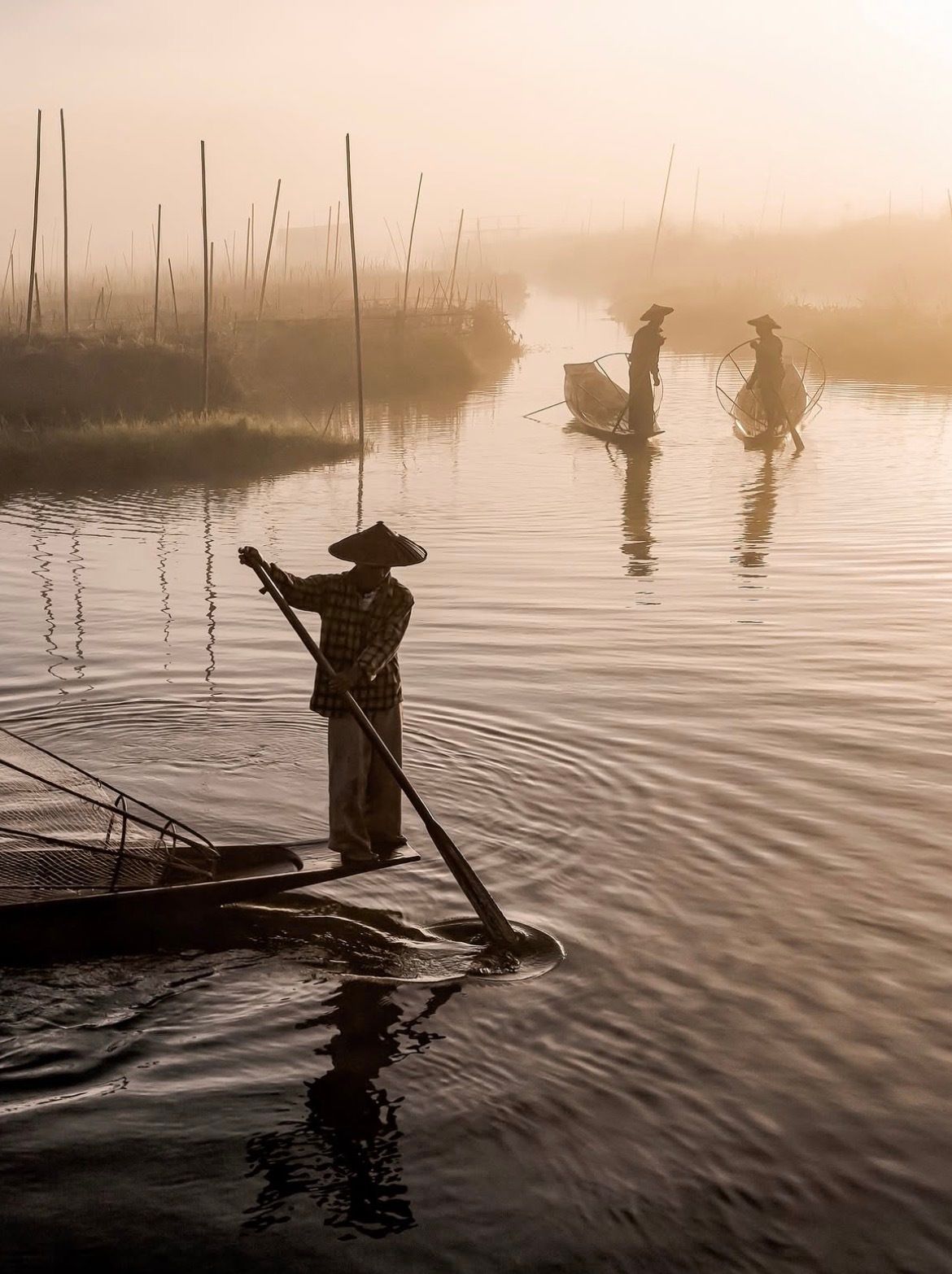
Let’s Analyse this Photo
Composition & Framing
What works well:
Right from the start we can see, we have a few layers → first, the fisherman in the left foreground, then comes the water behind him, after that, the two men with their boats on the right → behind them the grass/landscape/rest of the water/river→ it all creates a nice sense of depth and leads the eye naturally. The water/river itself kind of guides your eye too, (along with the light) → you start with the fisherman on the left first and then naturally go upward where the light is, you land on the two men on the right → and then you sort of follow the river section further back into the distance. It all has a very natural and pleasant flow.
I will briefly touch on the balance, which is actually very nice here (pointing that out since I always cover it at the end). Yes, the foreground fisherman on the left is larger and visually heavier (+ we see more of his boat etc.), but he is balanced out well by the two other fishermen and their boats on the right as well as the empty water itself.
The spacing between our subjects (the fishermen) is well judged, nothing overlaps awkwardly, and everyone has room to breathe.
The negative space created by the water keeps the frame from feeling busy, even though there is quite a lot going on conceptually.
What could be better:
The horizon and land-water transition is very soft due to haze, which slightly weakens the overall structure of the frame.
The composition is very centred vertically, which does make the frame feel calm yes, but also slightly static. Playing a bit more with the framing → Shifting the is lower or higher maybe, could have added more tension.
There is no strong visual anchor in the far background, so the eye eventually kind of drifts around without a ‘satisfying’ endpoint (but honestly that is almost nit picking).
Light & Atmosphere
What works well:
The light is definitely doing a great job here. That soft, hazy morning glow wraps everything in a calm, meditative (almost spiritual) mood. It feels quiet, early, and unhurried (just like fishing itself ;)).
The haze, I would say, is a plus. It naturally simplifies the scene, reduces the background clutter, and keeps the focus on the fishermen. → BUT → it still gives you the chance of exploring more detail in the background if you as the viewer want to do so.
The stillness of the water reinforces the calm atmosphere, no harsh reflections, no chaos, just a few ripples and soft light.
What could be better:
The highlights in the brightest parts of the misty sky are still a bit pushed. Pulling them back slightly could add more tonal separation without losing the softness.
Because the atmosphere is so even and gentle, the scene lacks a strong contrast punch, it is beautiful, but very subtle overall (but as always it depends on what kind of atmosphere you want to create).
Colour & Tone
What works well:
Colour is very interesting, the overall palette is very restrained and cohesive → everything is sort of ‘dipped’ in that pale yellow, cream, and soft brown tone, which of course limits the palette, but it does give it a very cool vintage type of look which I personally really like (might not be for everyone → some people would have preferred more colour → bring out the green of the grass, the colour of the water, the dark browns of the boats etc.)
The tint, as just touched on, unifies the water, grass, clothing, wood, landscape making the photo feel very timeless. (again not everyone’s cup of tea and something like that obviously does not work for every photo)
What could be better:
Because everything leans into the same warm tone, you lose some natural colour variation. Water, wood, clothing etc could look more distinct with a bit more separation.
A slight cooling of shadows might help balance the warmth a bit more, without breaking the look.
Texture
What works well:
The texture of the water is very nice, very glossy and tactile.
The wooden boat (the one on the left) has a bit of nice texture and character too.
The haze overall enhances texture by simplifying everything and letting the most important surfaces stand out.
What could be better:
Obviously, some texture in the distant landscape is lost to haze. It works atmospherically, but limits visual detail.
Emotion & Story
What works well:
The story comes through very clearly. An early morning, everyday work, fishermen already out on the water while the day is just beginning.
The two fishermen on the right look like they are having a conversation, which adds a nice touch and makes the scene feel lived-in.
From the boats, clothing, and fishing method, you can actually read/guess cultural context → this was taken in Myanmar.
What could be better:
Faces are not visible, so emotional connection stays a bit distant. You understand the situation, but not the individuals.
Balance
The photo is well balanced overall, with the heavier foreground subject on the left countered by the two fishermen and boats on the right.
The calm water and open space help distribute visual weight evenly.
Learn The Art Of Photography

Get full and free access to my Creator University - The World’s Best Online University for Photographers & Creatives: Get access to hundreds of amazing photography courses, learn from professional photographers, connect with students and much more!
Photographer of the Week
Photographer of the week goes to: Tomaž Drnovšek
You can find him on Instagram as: @tomazdrnovsek
A few photos of his:


The Rest of this Issue is for Premium Subscribers
