📸 SNAPSHOT - Issue 105
Welcome to a brand new Issue of my Magazine. A truly brilliant one, enjoy the read :)


In this Issue
Sigma’s New Lenses - A Closer Look

Sigma has announced two new lenses this week, expanding its lineup for both full-frame and APS-C mirrorless systems. The company introduced the 35mm f/1.4 DG II Art for full-frame cameras alongside the 15mm f/1.4 DC Contemporary for crop-sensor bodies.
The new Sigma 35mm f/1.4 DG II Art is a fast wide-angle prime designed for Sony E-mount and L-Mount full-frame cameras. It builds on a long lineage that stretches back to the original 35mm f/1.4 DG HSM Art for DSLRs released in 2013 and the mirrorless-specific DG DN version that arrived in 2021. While that earlier mirrorless model was already well regarded, the new DG II version focuses on making the lens more compact and lighter while also improving optical performance.

Sigma says the lens is about 14% shorter and roughly 20% lighter than the DG DN model. It measures around 96 millimeters in length and weighs approximately 512 grams, which makes it noticeably easier to carry for everyday shooting, travel, or event work. Despite the smaller size, Sigma claims this is the best-performing 35mm f/1.4 lens it has ever produced in the Art series.
The optical design has been completely reworked and now consists of 15 elements in 12 groups. This includes four high-precision aspherical elements and two SLD (Special Low Dispersion) elements to control aberrations, especially axial chromatic aberration that often affects fast primes. Sigma also incorporated new glass materials that were previously difficult to manufacture, allowing more complex optical correction.

A newly developed Advanced Amorphous Coating (AAC) is applied to reduce internal reflections, flare, and ghosting, issues that tend to show up in high-contrast scenes or when shooting toward strong light sources. The lens is designed to deliver high resolution across the frame even at its maximum f/1.4 aperture.
Like most lenses in this class, background rendering is an important part of its appeal. The lens uses an 11-blade diaphragm to produce smooth out-of-focus areas and rounded highlights. While it won’t produce quite as much blur as Sigma’s larger 35mm f/1.2 Art lens, f/1.4 still allows for strong subject separation.

Autofocus is handled by a dual HLA (High-response Linear Actuator) system, the same technology used in Sigma’s higher-end lenses. This system moves the relatively large focus group quickly and quietly, making the lens suitable for both still photography and video. Sigma also designed the lens to minimise focus breathing.
Externally, the lens includes weather sealing, two customizable AFL buttons, an AF/MF switch, and a dedicated aperture ring that can be locked or de-clicked for smooth video adjustments. A petal-shaped lens hood is included for protection and flare control. The Sigma 35mm f/1.4 DG II Art is scheduled to launch on April 16 for $1,059 in Sony E-mount and L-Mount versions.
A few sample shots:

Takashi Shikano

Takashi Shikano

Takashi Shikano
Alongside the full-frame release, Sigma also introduced the 15mm f/1.4 DC Contemporary, a fast wide-angle prime designed specifically for APS-C mirrorless cameras. This lens replaces the long-running 16mm f/1.4 DC DN Contemporary introduced in 2017, which became a popular option for travel, vlogging, and astrophotography thanks to its bright aperture and relatively affordable price.
The new 15mm version is significantly smaller and lighter than its predecessor. Sigma says it is about 30% shorter and roughly 50% lighter, weighing 220 grams. The filter thread has also been reduced from 67mm to 58mm, which makes filters easier to carry and less expensive.

On APS-C cameras, the lens provides a field of view roughly equivalent to 22.5mm on Sony and Fujifilm bodies and about 24mm on Canon APS-C cameras.
Autofocus is driven by a stepping motor designed to be smooth and quiet, which is particularly useful for video recording. Sigma says the lens can track fast-moving subjects and has been engineered to minimise focus breathing for natural-looking focus transitions.

Optically, Sigma focused heavily on improving edge-to-edge sharpness compared to the older 16mm lens. The design includes one FLD (F Low Dispersion) element, three SLD elements, and three double-sided aspherical elements. These components work together to control distortion, chromatic aberration, and coma, the latter being especially important for astrophotography, where star points can otherwise smear toward the edges of the frame.
Despite its compact size, the lens retains a bright f/1.4 aperture, allowing it to perform well in low-light. The nine-blade aperture diaphragm helps produce smooth background blur, though at this focal length depth of field will generally remain fairly deep unless shooting very close to subjects.

The lens is dust- and splash-resistant and includes a physical aperture ring on Sony E-mount and Fujifilm X-mount versions. The Canon RF-mount version instead features a customisable control ring, in line with Canon’s system design.
The Sigma 15mm f/1.4 DC Contemporary will be available starting March 12 for $579 in Sony E-mount, Fujifilm X-mount, and Canon RF-mount APS-C versions.
A few sample shots:

Owashi Yosuke

Owashi Yosuke

Owashi Yosuke
Learn The Art Of Photography
Get full and free access to my Creator University - The World’s Best Online University for Photographers & Creatives: Get access to hundreds of amazing photography courses, learn from professional photographers, connect with students and much more!
Interview with Phil Penman
This week’s Interview with Phil, a talented photographer from the UK. I am truly honoured to have had the opportunity to interview him!
You can find him on Instagram as: @philpenman
Enjoy the amazing Interview ;)

Can you tell us a bit about yourself?
I’m originally from Dorset in the UK, I began my photographic journey in the darkroom at the age of 15. I studied photography at the Berkshire College of Art and Design funded by working various jobs including, Street cleaner, Nightclub barman, DJ , Champagne Waiter at Ascot, Bacon Sandwich seller at Twickenham Rugby Club, Garbage Man, and a load more weird and wonderful jobs. I then took to working for the newspaper industry red tops as we call them and also doing corporate portraiture for Microsoft.
In 2000 I moved to Los Angeles to work for a celebrity news agency. My life revolved around a constantly packed suitcase flying off all over the world every week. I did this for about 5 years before going freelance. My day to day work was either riding a bicycle chasing the rich and famous around the streets of Manhattan or doing deep cover investigative work tracking down killers in the rain forests of Brazil. Life was certainly not boring.
In 2001 I covered the World Trade Center attacks in New York. The work was seen around the world and led to me having great friendships with many of the people I photographed that day. The work now is part of the permanent archive at the 9/11 Museum.
Around 2010 the news industry was going down the toilet fast with prices rapidly dropping. I decided to utilize my time on the streets by no longer looking for celebrities, but to capture the weird and wonderful characters of New York City as well as the dramatic street scenes.
In 2015 I had my first show at the Leica Gallery in New York. The show gained worldwide attention from the media and my following shows at Harrods in London and Mayfair were included as “the top things to do in London” by both Vanity Fair and GQ Magazine.
In 2019 I released my debut street photography book which went Number 1 on Amazon and has been featured at MOMA and Fotograiska in New York.
How did you first get into photography?
It’s funny how life works out. Originally I wanted to be a sport teacher and needed a second subject for my studies. My dad was a photographer and we had a darkroom at home so it made sense. It soon became clear I loved photography more than the sports studies. My father bought me my first ever camera. A nikkomat 35mm film camera and I used a Weston light meter, this was the best way to learn.
Who would have thought that years later a camera would enable me to see the world, meet influential business people like Bill Gates or drink cups of tea with actors like Christopher Reeve aka Superman and see the beautiful mountains of Kashmir. The camera not only allowed me to see things differently, but also allowed me to experience things in life, in a way that might have not been possible before.

Why black and white photography?
It was in the darkroom that it all started. It’s like a bug that you catch and cannot get rid of. Shooting the images, developing the film and then seeing the final result on paper. Any one thing you do could influence the outcome. This was the beauty of it.
I went into the workforce, shooting for commercial clients and agencies predominantly in color. However, sometimes when your passion becomes your job, it takes the fun out of it. This is exactly what happened to me.
To find my passion again , I bought myself a leica. Started editing everything in black and white and this became my separation from work. It was this that brought back my love of photography. I’ve found I shoot my best work when I’m having fun with it. So it came to be that most of my work is black and white.
You have travelled a lot, what would you say is the best location for street photography?
Right now I’m really enjoying Tokyo but Paris and New York are incredible places. You can make pictures pretty much anywhere though and many places I would still love to go to.

What does photography mean to you?
It’s been my life work since I was 15 years old. It pretty much is me at this point.
What gear do you use?
I’ve been using Leica cameras since 2004 before and before that I used Nikon and Canon. My go to camera’s now are the Leica M EV 1 and the Leica M11 Monochrom.

Do you prefer shooting in the chaos of a busy street or in quieter, more intimate spaces?
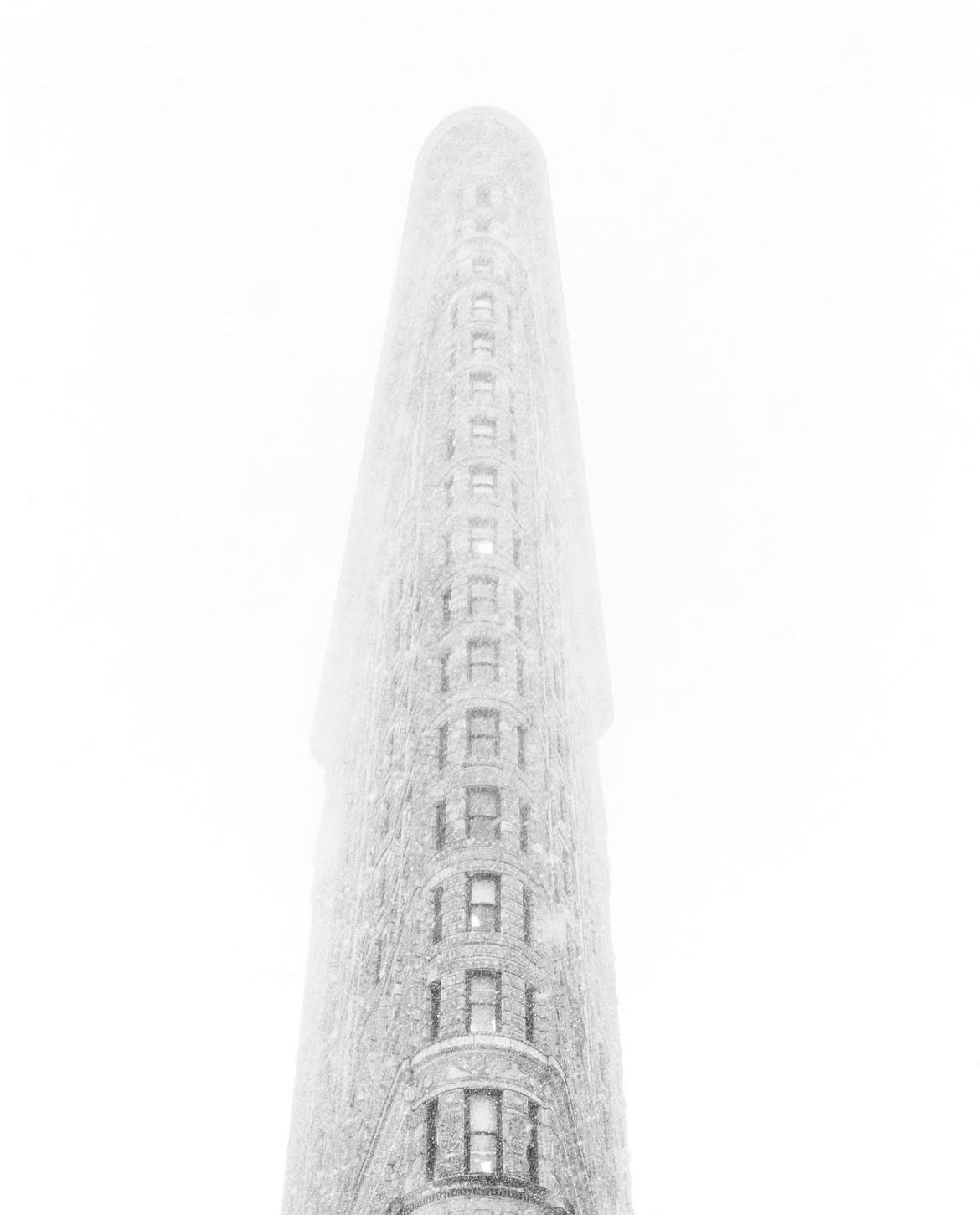
I would say quieter surroundings. Interesting weather environment like Snow or fog is preferred though. My dream would be to walk around early morning Rome in a snow storm.
What are your favourite shooting conditions?
Definitely shooting in the snow.
How do you decide on what moments to capture and which ones not? Or do you just shoot everything?
History has taught me you shoot everything as you don’t know what will be relevant in the future. My nightmare would be to wake up up in 50 years and regret that I just shot the same images and style my entire life.
What are some of your favourite photography techniques and why?
I’m inspired by the slow shutter speed work of Alexi Titarenko and always try to figure out if there is a way I can incorporate into my work without being a clone or rip off of his beautiful work. I do shoot many different styles though. Its good to be an all rounded photographer.

How did you find your unique photography style?
Still a work in progress, I just shoot things that give me joy but once I find people trying to be clones of a particular style I do, then I switch things up. Without knowing it, they are actually pushing me to become a better photographer.
Ever so often you do exhibitions and book signing, how is that and can you tell us a bit about your book?
Doing a book or show is the ultimate for me. It’s the one time you get to present your work and not being worried about an algorithm killing it or not showing it to people. Doing a book though is no small undertaking. It will cost you a fortune and you will make no money ! It’s more about getting your work out there around the world. My best advice is consult a lawyer on contracts and be very weary of what publishers offer you. Thankfully I have a great publisher with Teneues now. I just completed my 4th book since 2019 "Phil Penman - Street Scenes"
Two more in the works. Never in a million years would I have ever thought this possible so am truly grateful to everyone that has supported me.

What’s the most challenging thing about photography for you?
Keeping my work interesting for me !
Can you walk us through a typical shooting day?
A typical day now. Wake up 5am or earlier depending on where in the world I am. Answer emails and plan social posts. Hit the streets for a few hours to shoot or go visit Museums for inspiration, then back to answering emails and social comments / messages. It’s important you respond to people, especially if they took the time to give you kind words about the work. In the evening I watch films / TV series for more inspiration. Then its sleep and get up do it all again.
Today though, its wake up 4am, fly to Tokyo , then I will be shooting for next 2 weeks non stop with editing and social posts happening around 3am. Jet lag is a beautiful thing!

Do you listen to music during your creative process and if yes how do you think it influences you?
I love listening to music whilst shooting. Not all the time obviously but when it’s safe to do so and not when I am engaging with people. Rudest thing you can do is to talk with people with your ear buds in. I used to be a DJ playing clubs in the UK so music has always been a large part of my life.
What is your favourite subject to shoot?
Portraits of interesting people. I love meeting people and finding out things about them. You learn a lot of life lessons this way.

Who are some photographers or other artists that inspire you?
Favorites are Sebastiao Salgado, Elliot Erwitt, Arnold Newman
How do you know when you’ve nailed the shot? Is it instinct or something else?
I think you just know when you hit it !

How important is composition in photography?
For me it’s very important. It should come naturally though from lots of practice. It’s not something you should be actively thinking about it because then you are not paying attention to other things. In the beginning you will need to pay a lot of attention to everything until it becomes muscle memory. 3 things to make a great image 1, Subject, composition , lighting. If you can learn those three you are onto a winning formula.
What’s your advice for someone who wants to start exploring monochrome street photography?
Switch your viewfinder to Monochrome mode if you are able to and it’s not an optical viewfinder. It will help you envision the final result a lot easier.

Is there a photography genre you haven’t tried yet, that you would like to explore?
I have pretty much done them all at this point. I would like to go back to printing my own work again if I had a darkroom. I would probably like to do some more fashion work , I am personally into the fashion world from a design perspective anyway so would be cool to explore this more.
How important is lighting in photography?

The rest, 5 more questions of this Interview + an additional exclusive photograph selection, are for Premium subscribers only.
First Leica M to Canon RF Autofocus Adapter

A new adapter from Megadap is trying to do something that, until recently, would have sounded unlikely, bring autofocus to Leica M lenses on Canon RF cameras.
The company’s new M2RF is being described as the world’s first Leica M to Canon RF autofocus adapter. In practical terms, it means you can mount a manual-focus Leica M lens onto a Canon RF-mount mirrorless body and get motorised autofocus, without modifying the lens itself.

Leica M lenses have always been manual focus, designed for mechanical rangefinder systems. They are known for their compact size and distinct rendering, but they have never been about convenience. The M2RF adapter changes that by building a motorized helicoid into the adapter. Instead of the lens focusing internally, the adapter physically moves the entire lens forward and backward to achieve focus, similar to how Megadap’s earlier Leica M to Nikon Z adapter worked when it launched in 2020.
According to Megadap, the M2RF integrates directly with Canon’s Dual Pixel autofocus system. That means users should be able to use Eye Detection, Subject Tracking, Face Priority, and continuous AF modes through the camera body, just like they would with native RF lenses. The adapter includes electronic contacts to pass along EXIF data, and in some cases it can support aperture control through the camera interface, depending on the lens design.

There is also a quick switch for toggling between autofocus and manual focus, giving users the option to go fully manual when they want more control. The adapter includes selectable macro and infinity modes as well, extending its usable focus range in different shooting scenarios.
One concern with these kinds of motorized adapters is stability, especially when using heavier M-mount lenses. Megadap says the M2RF has been engineered to handle larger optics and is built with a rigid structure to reduce wobble during operation.

Interestingly, the adapter is also described as stacking-friendly. That means you could theoretically add additional mount adapters, such as EF or even F-mount adapters, on top of it while retaining autofocus capability. It opens up some experimental cross-system combinations for photographers who like mixing lens ecosystems.
The Megadap M2RF is expected to be officially released in May 2026. Pricing has not been announced yet, and more detailed compatibility information is expected closer to launch.
Photography Tip of the Week


The weekly photography tip is only accessible to Premium Subscribers of The Magazine For Photographers.
Photo Analysis
Welcome to the part of the Magazine Issue where we take a closer look at a photo and analyse it so that you can learn and better your own photography from it ;)
Photo by: @jccabral_color

Let’s Analyse this Photo
Composition & Framing
What works well:
The layering is a strong aspect here → First we have the immediate foreground (leaves), then the man, then the river, then the iconic Charles Bridge, followed by the architecture behind it, and finally the sky. That stacking creates strong structure and depth.
The seated person (I am guessing an elderly man by the looks of it) provides a very clear anchor point and draws you into the scene immediately.
The horizontal line of the bridge stabilises the composition nicely.
What could be better:
The silhouette of our subject blends into the darker tones a bit, reducing the ‘clean separation’, however the photo is all about mood in my opinion so the dark tones do fit.
The left-side foliage/tree is somewhat heavy and could have been slightly cleaner to make the frame breathe better, especially on that side where it already overlaps a bit (you could argue however that the tree again helps with the mood/vibe since it sort of ‘‘covers’’ the scene, creates some privacy and making this spot where the man is sitting that much more special → so yes it has positives and negatives, maybe a better repositioning while shooting could have incorporated both aspects into on, that would have been perfect).
Light & Atmosphere
What works well:
The evening light is beautiful here and it just fits with the scene, mood and location.
Those warm clouds in the sky add a sort of ‘romantic’/nostalgic atmosphere that again fits with the scene perfectly. It feels gentle and emotional rather than dramatic.
As touched on before, the overall darkness in parts of the frame actually plays into the mood cards here, it enhances the contemplative feeling instead of hurting it.
The subtle highlights in the water add texture and some movement, preventing the lower half from feeling flat.
The overall atmosphere feels peaceful and intimate, like a quiet and warm autumn evening.
What could be better:
Some areas are quite dark, especially in the foreground, which reduces visible detail (again, here it works but it is still a technical limitation).
Colour & Tone
What works well:
The warm tones in the clouds and stone architecture contrast beautifully with the cooler water.
The romantic golden hue in the sky adds emotional warmth to the scene (as you can see I am a big fan of that).
The overall palette feels cohesive and slightly muted, which supports the calm mood.
What could be better:
A bit more tonal separation between foreground and midground could enhance depth.
Story & Emotion
What works well:
This is probably the strongest aspect of the photo. Even though the subject is in silhouette and we do no see his face, we do no really need to for this to work → his posture, clothing, and the calm setting tell us enough → an elderly man, lost in thought, simply enjoying this warm autumn evening and scenery.
The fallen leaves obviously suggest that this was taken in autumn.
Again, it feels like he is simply admiring the beautiful scenery of Prague and possibly enjoying one of the last warm autumn days of the year.
Charles Bridge is honestly so iconic and speaks for the city on its own, it gives the photo instant identity, a special type of mood and a strong sense of place (as you might have noticed I am a bit bias towards Prague hahaha, it is where my Grandmother lives, and for anyone who has not visited it yet, highly recommended. It is one of the most beautiful cities on earth and the photographic opportunities/scenes are incredible!).
What could be better:
Because the face is completely hidden, emotional nuance, personal connection etc. is of course limited.
The storytelling is strong in mood, but not very specific, it remains open-ended (not necessarily a bad thing) → a slightly clearer gesture could deepen the narrative further.
Balance
What works well:
The dark foreground balances the brighter sky and architecture nicely.
The horizontal span of Charles Bridge distributes visual weight evenly across.
The skyline structures/buildings prevent the upper half from feeling empty (the clouds help with that too).
What could be better:
The bottom of the frame is relatively heavy due to the dark silhouette and shadow.
As touched on all the way in the beginning, the left side feels slightly weightier because of the tree.
Join Our Photographer Group!

Get access to the best photographer group/community for networking, collaborating, gear talk, feedback on your work and so much more!
Photographer of the Week
Photographer of the week goes to: Martin Deeley
You can find him on Instagram as: @martin_deeley
A few photos of his:


The Rest of this Issue is for Premium Subscribers
