📸 SNAPSHOT - Issue 110
Welcome to a brand new Issue of my Magazine. A truly brilliant one, enjoy the read :)
In partnership with


Is Tokina Coming Back To Photography?

Tokina was once a pretty major name in the lens world, especially during the DSLR era, but if you have been paying attention over the past few years, it has been easy to assume the company quietly stepped away from photography. New releases have been few and far between. The last proper photo lens dates back to 2022, which only adds to that impression. But Tokina has not disappeared. In fact, the company is working on a new lens right now, teasing it as “one lens like no other.”
To understand why that matters, it helps to look back a bit. Tokina has been around for 76 years, and it has been making its own lenses for 66 of those. The company was early to jump on zoom lenses back in 1967, and from there it built a strong reputation through the film SLR and DSLR years. For a long time, Tokina was especially popular among Canon EF and Nikon F-mount shooters, with lenses like the AT-X 17-35mm f/4 Pro, 24-70mm f/2.8 Pro, and the well-regarded AT-X M100 macro. On the APS-C side, lenses like the 11-16mm f/2.8 and 12-28mm f/4 were everywhere.
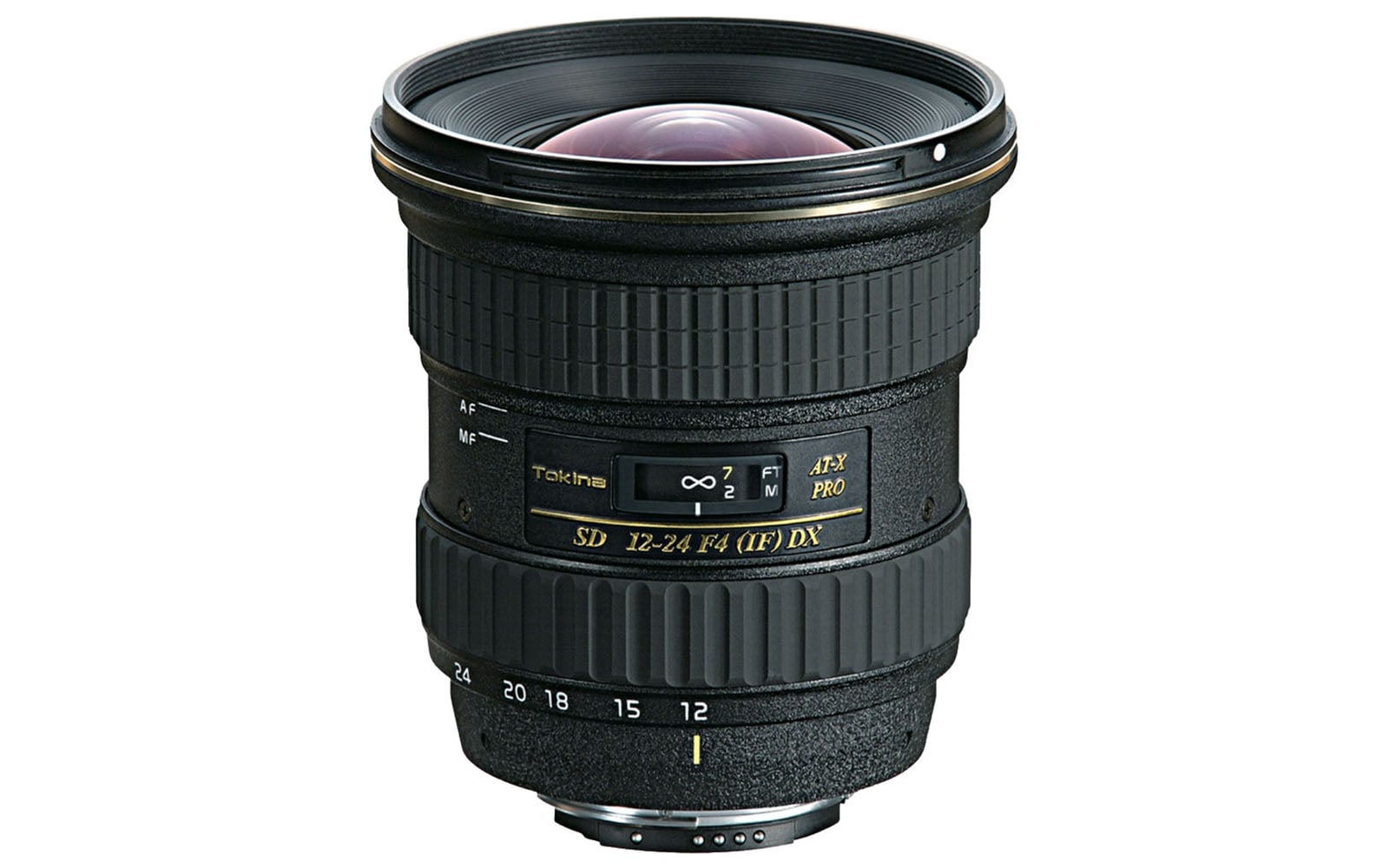
okina AT-X 12-24mm f/4 Pro
Then mirrorless happened, and Tokina never really moved at the same pace as everyone else. While other brands were going all-in, Tokina was still releasing DSLR glass like the Opera 50mm f/1.4 in 2018 and the 16-28mm f/2.8 in 2019.
The company did experiment with mirrorless lenses through its FiRIN line, starting in 2016, but even there, things felt a little slow and inconsistent. The first lens was a manual focus 20mm f/2, and it took a couple of years before an autofocus version showed up. Later, Tokina introduced its atx-m series for mirrorless, but that lineup ended up focusing mostly on APS-C, with only a handful of lenses available today.
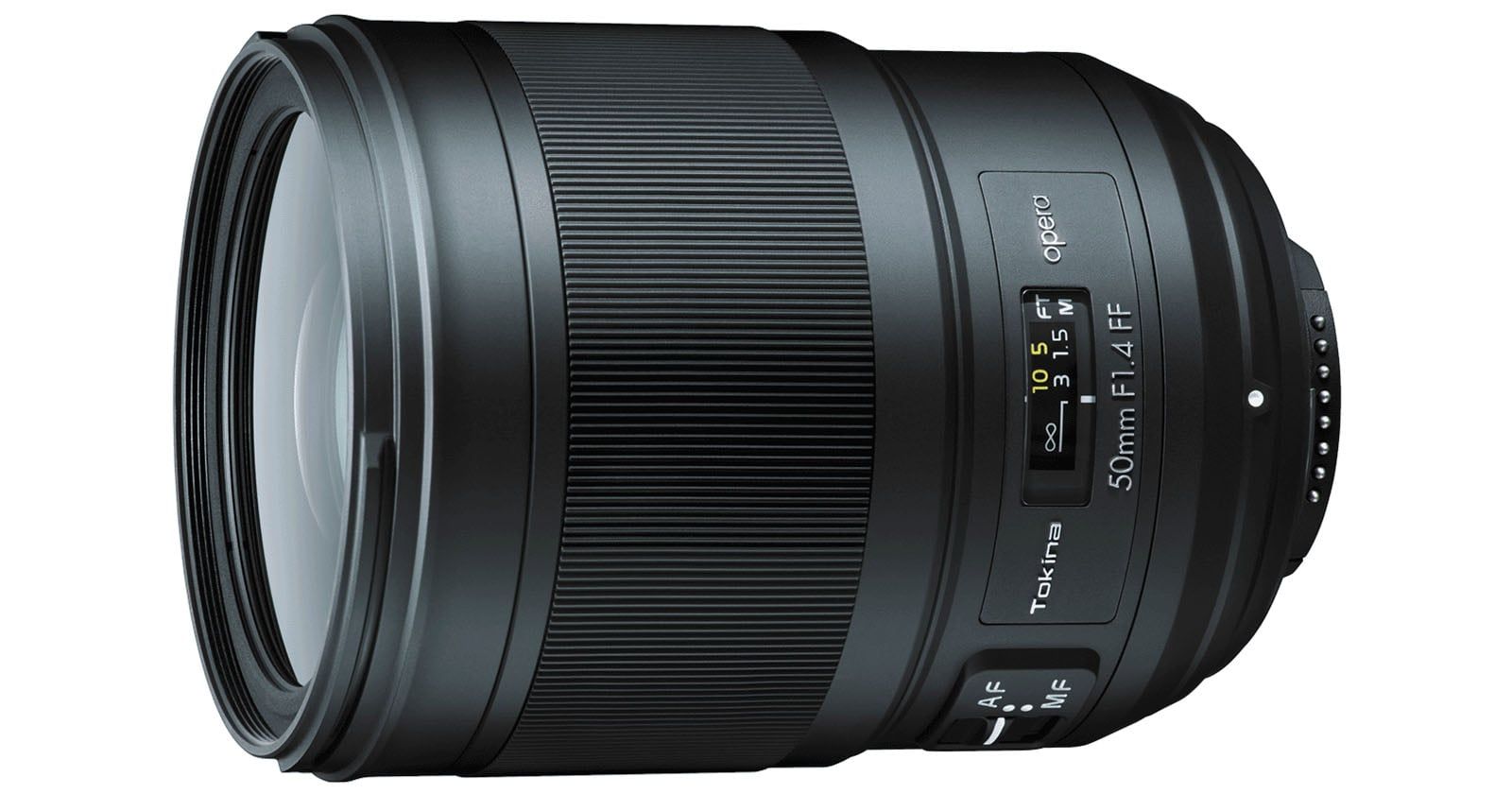
Tokina Opera 50mm f/1.4
After the atx-m 11-18mm f/2.8 launched in September 2022, things went quiet on the photography side.
That does not mean Tokina stopped making lenses altogether, though. Its cinema division, Tokina Cinema, has been very active, releasing high-end cine primes like the Vista series. These are serious, professional lenses that can cost up to $20,000 each, which is a very different market compared to Tokina’s traditionally affordable photo lenses.
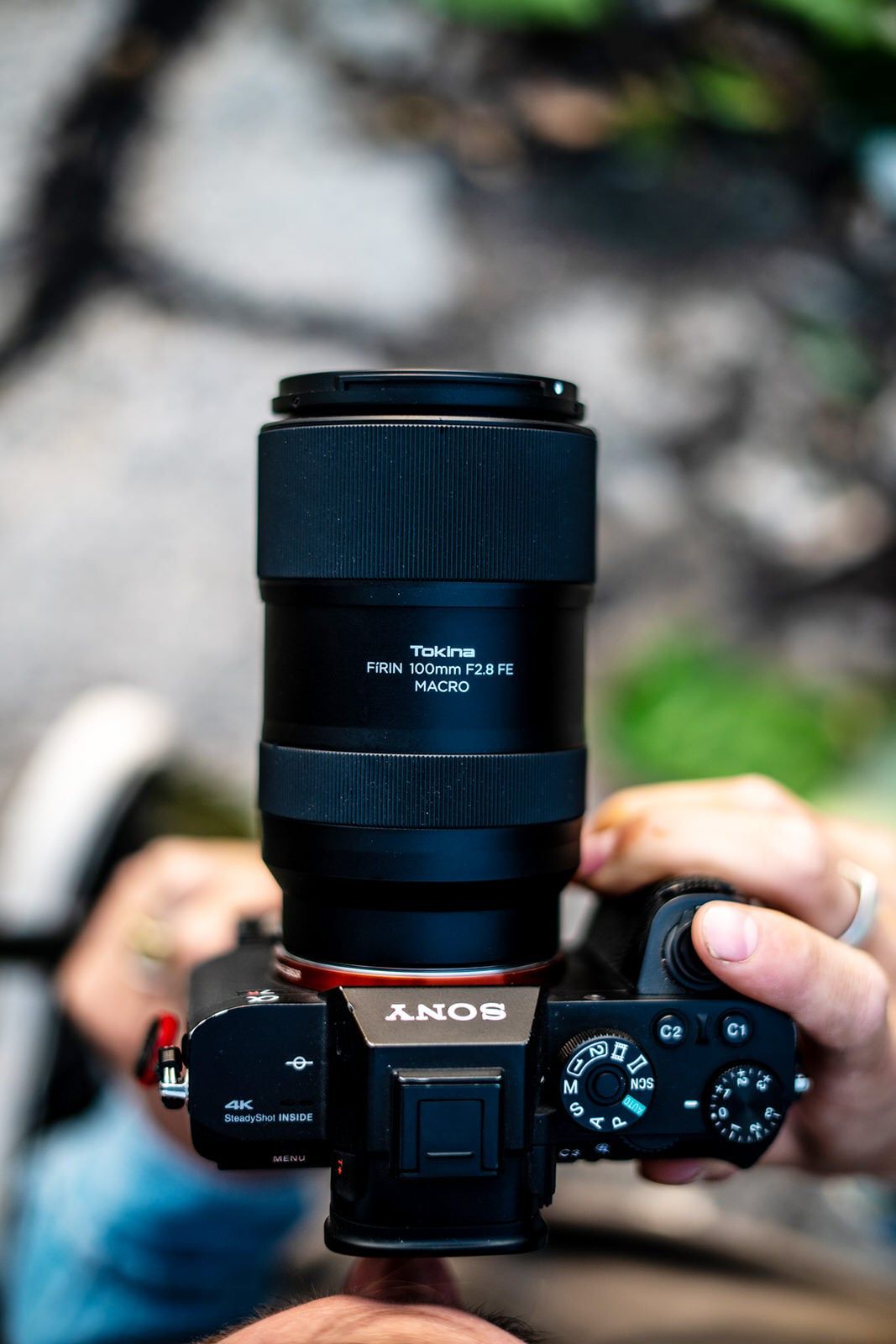
Tokina Firin 100mm f/2.8
Because of that shift, it has been fair to wonder whether Tokina had simply moved on from photography entirely. The margins are clearly better in cinema, and the company seemed to be putting most of its energy there.
But that does not seem to be the case.
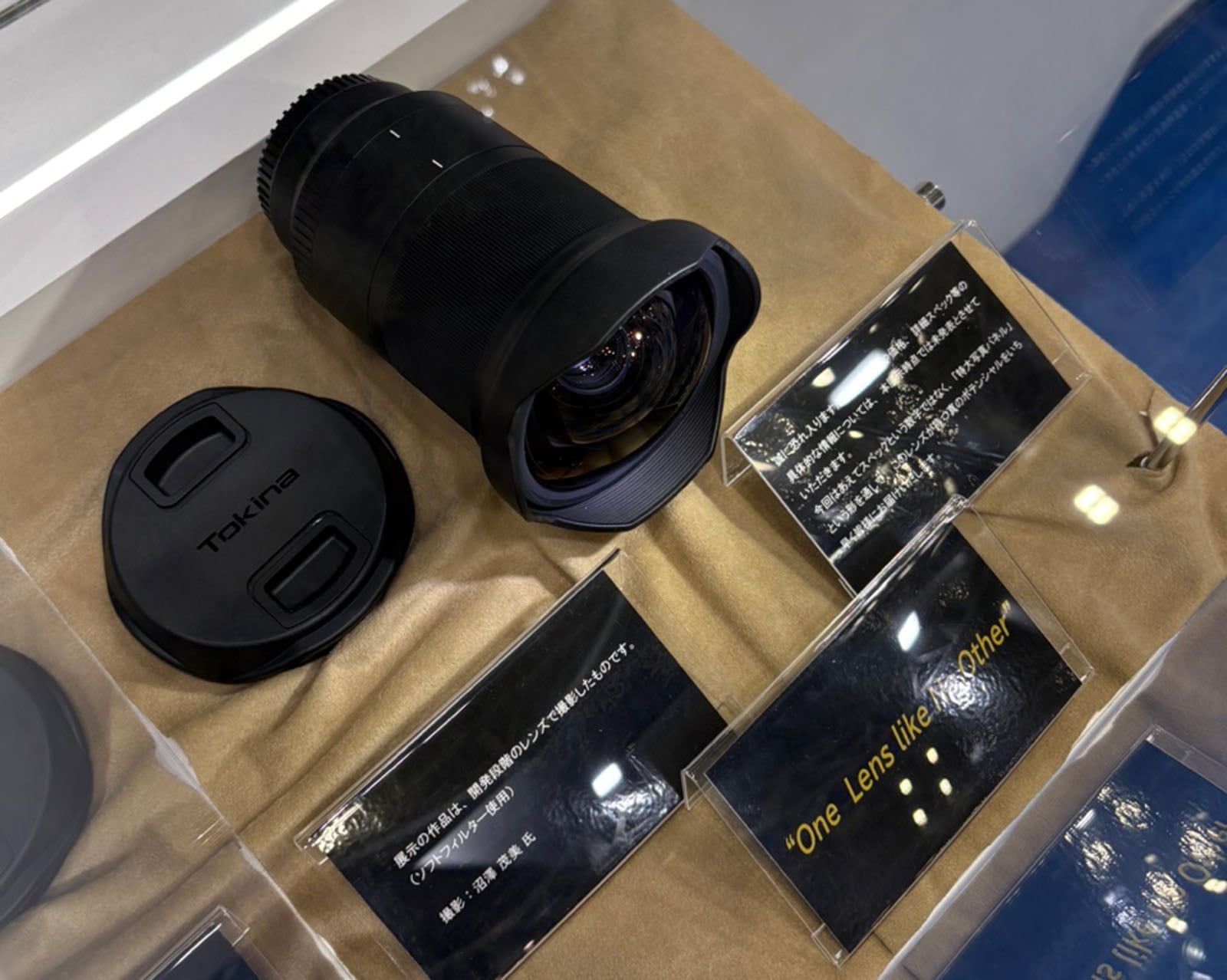
At CP+ 2026 in Yokohama, Tokina showed a teaser for a new photographic lens, describing it as a “next-generation” product and, more intriguingly, “one lens like no other.” That is about as much as the company shared.
And really, it is not much. The lens is still a prototype, and Tokina has not revealed any actual details. There is no focal length, no aperture, no pricing, and no release timeline. Even the final design could end up looking quite different from what was shown.

Normally, an announcement this vague would not mean much. But in Tokina’s case, it does.
After a few years of near silence in the photography space, the company is at least signalling that it is not done yet. The Tokina name, which has been on lenses for decades, is not going anywhere. And if the company follows through on that promise of something genuinely different, it could end up being one of the more interesting lens stories to watch over the next year or two.
Learn The Art Of Photography
Get full and free access to my Creator University - The World’s Best Online University for Photographers & Creatives: Get access to hundreds of amazing photography courses, learn from professional photographers, connect with students and much more!
Interview with Patrick Noack
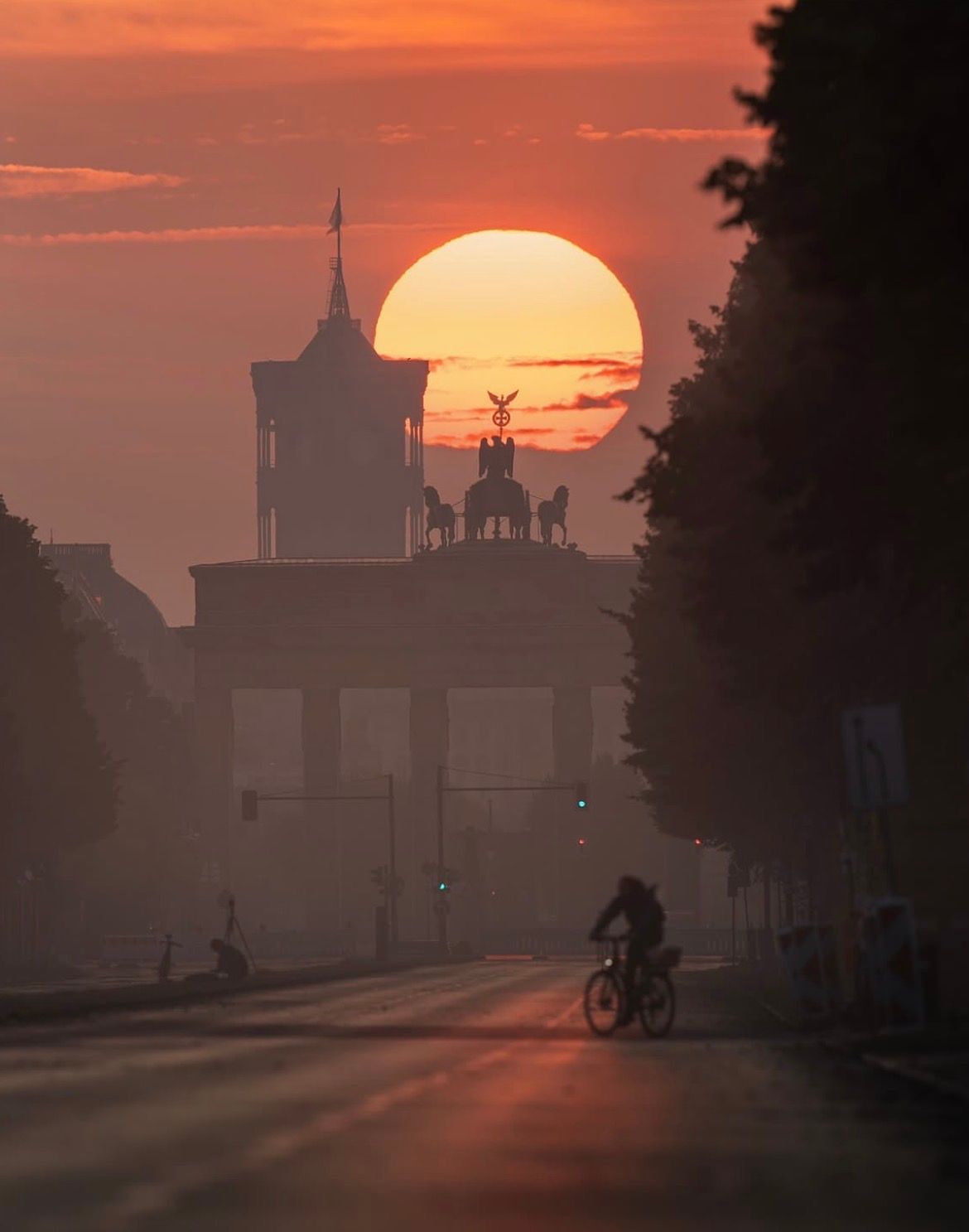
This week’s Interview with Patrick, a talented photographer from Germany. I am truly honoured to have had the opportunity to interview him again, this time with a closer look at his newer work!
You can find him on Instagram as: @patrick.noack
Enjoy the amazing Interview ;)

Can you tell us about yourself?
My name is Patrick Noack, and I’m a photographer from Germany. I mainly focus on cityscapes, specially when I travel, as well as street photography and occasionally landscapes. Over the years, photography has become much more than just a creative outlet for me. It’s a way of observing the world with intention. My goal is always to capture something that feels honest, atmospheric, and visually compelling.
What drew you to photography in the first place?
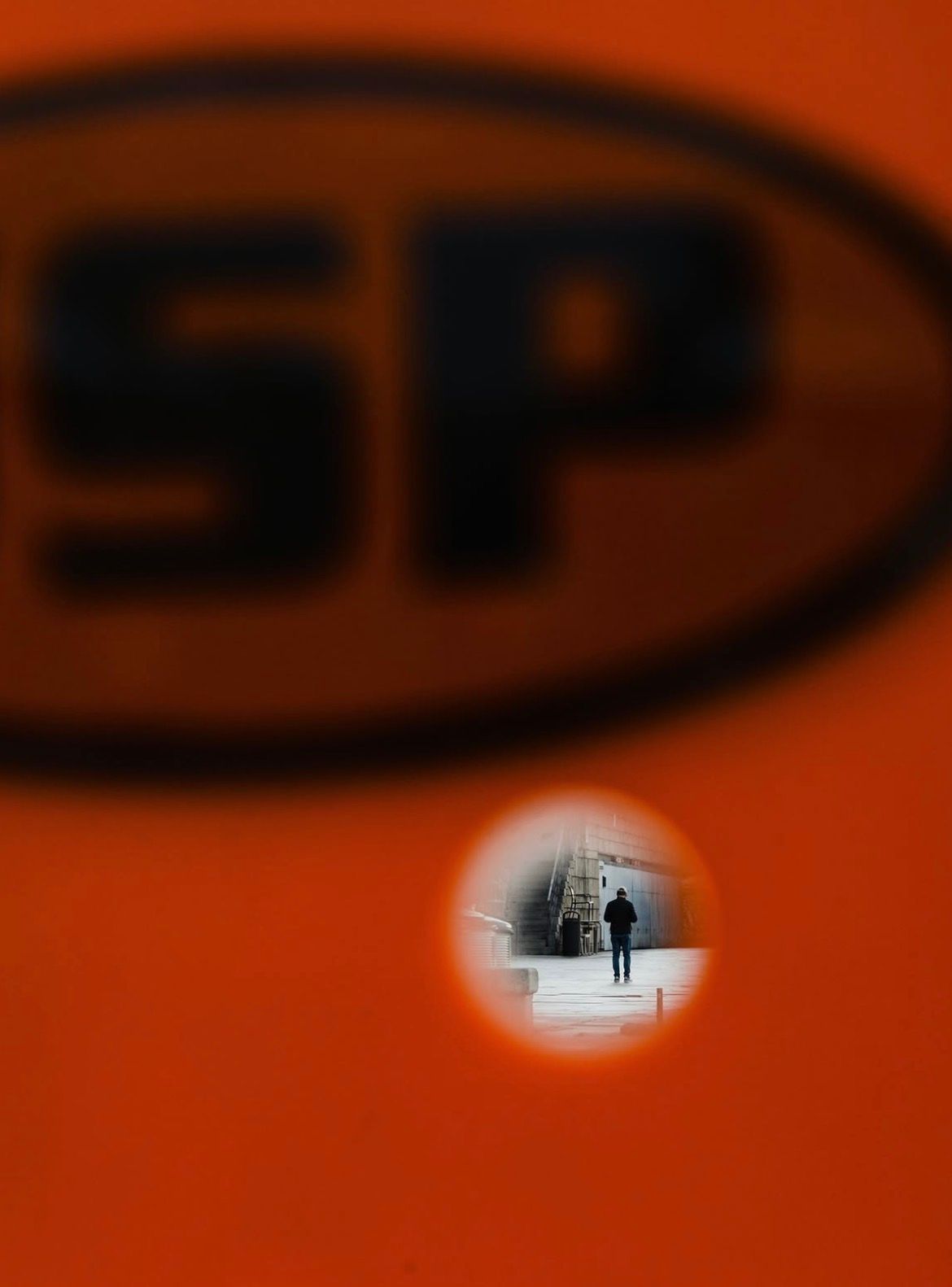
I actually stumbled into photography somewhat by accident. When I moved into a new apartment, I wanted to hang up some wall art but couldn’t find anything online that really fit my taste. That frustration led to an idea: why not create my own images? I grabbed a camera and started exploring the city with fresh eyes, photographing the architecture, light, and urban life. What began as a practical solution quickly turned into a genuine passion. It made me realize how many stories are hidden in plain sight, waiting to be captured.
What is the best spot to take photos in your city?
In Berlin, one of my absolute favorite places to shoot is Museum Island. It has a timeless beauty, and the way the architecture reflects on the Spree River, especially in the early morning light, is something that never gets old. I usually go there at sunrise, when the city is still quiet and the light is soft. There's a calmness in those hours that helps me focus on the details and atmosphere I'm trying to convey. Even though I’ve been there countless times, it always offers something new, a different cloud pattern, a subtle shift in light, or even just a person walking through the frame.
What’s your favourite time of day to shoot—sunrise, sunset, or something else?
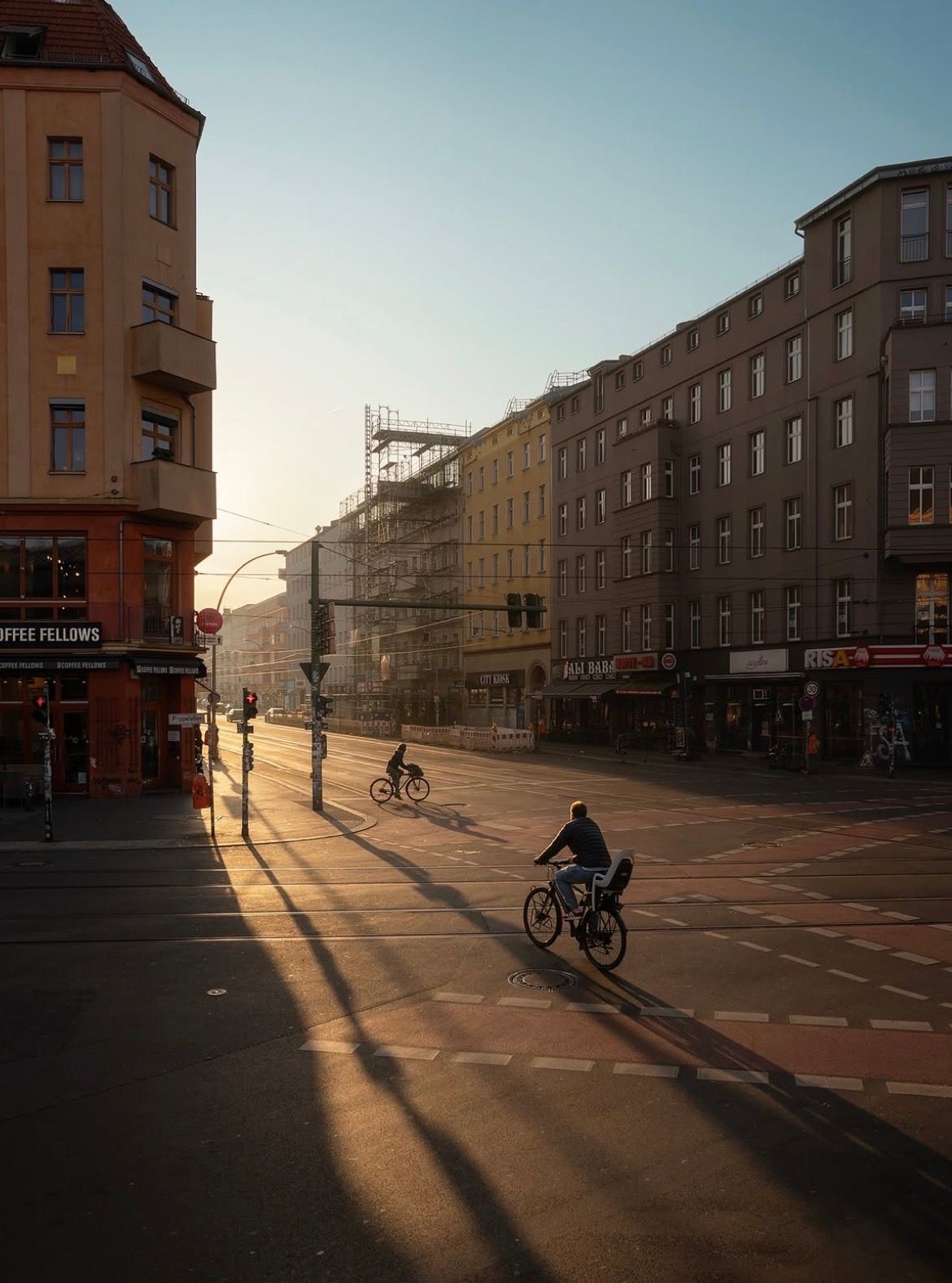
Definitely sunrise. There’s something almost meditative about getting up early, walking through empty streets, and watching the first light of the day hit the buildings. Everything is calm, and the lack of crowds gives me space to experiment and take my time with compositions. It's also when I find the most interesting colors and tone.

How do you scout locations for your shoots? Do you plan ahead or go with the flow?
It depends. When I’m in Berlin, I usually plan quite a bit. I research spots, weather forecasts, even how shadows might fall at a certain time of day. But when I’m traveling, I try to stay flexible. I love walking around a new city with no specific plan, letting the atmosphere guide me. Sometimes, the most interesting shots come from spontaneous discoveries. That balance between planning and improvisation is key.
Is there a dream location/city/country you haven’t photographed yet but really want to?
There are a lot of places still on my list, but Japan is at the very top. I’m fascinated by the contrast between its ultra-modern cities and serene natural landscapes. The culture, the architecture it all feels incredibly photogenic. I think Japan offers the perfect mix of cityscape and street photography opportunities, and I can already imagine getting lost in the side streets of Tokyo or photographing a quiet morning in Kyoto. I guess Japan is on every photographer’s bucket list.

Black & white photography or colour? And why?
I’m very much on Team Color. Life is just too colorful to ignore. I’m drawn to dramatic skies, reflections, and the unexpected palettes that come from certain weather conditions or lighting. Fog, thunderstorms etc. they all add emotion and complexity to a scene. That said, I do appreciate black and white for certain images, especially when I want to emphasize form, contrast, or mood without the distraction of color. But most of the time, color helps me tell the story I want to tell.
Do you prefer shooting in dramatic weather or when it’s calm and clear?
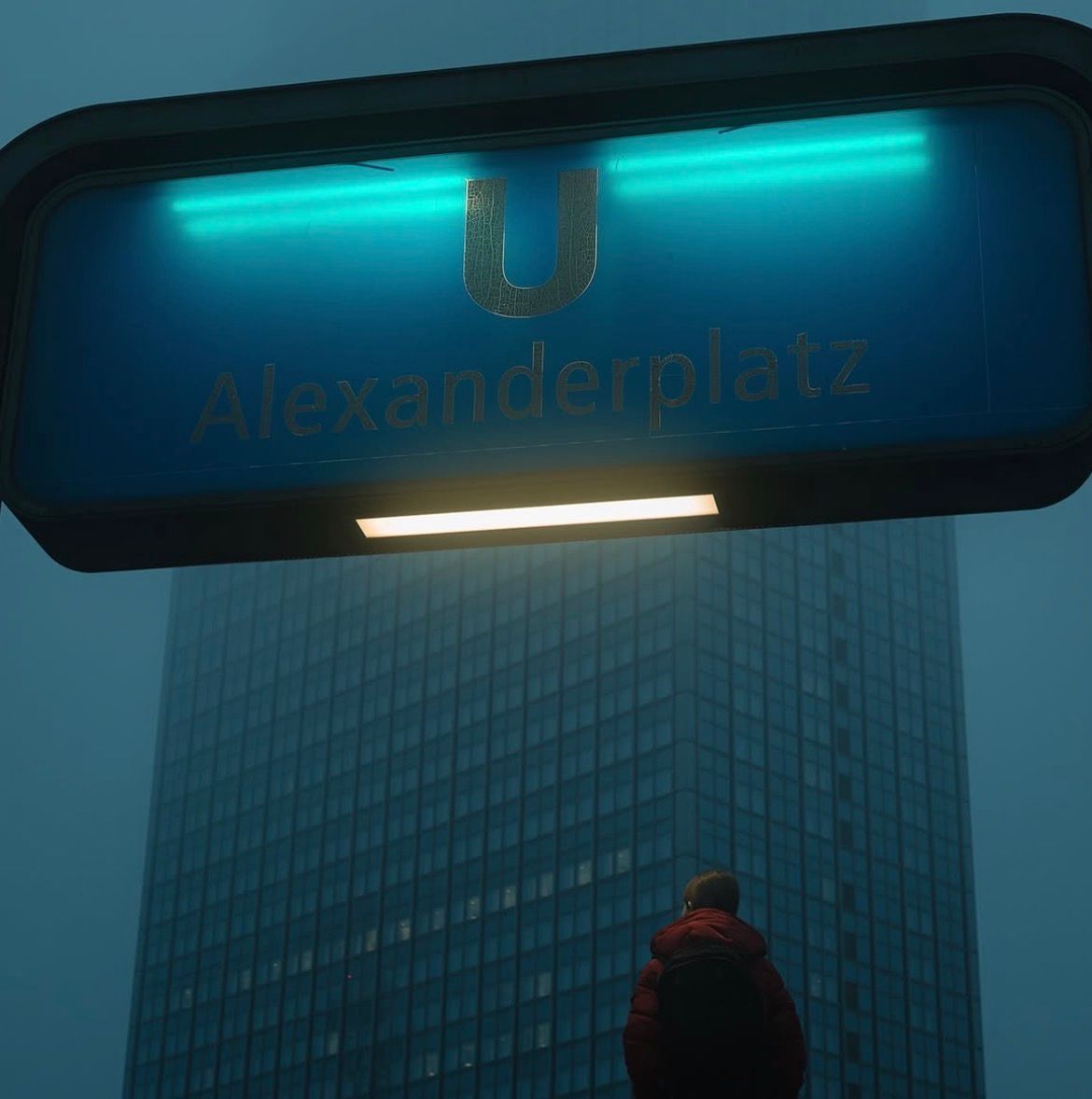
I love dramatic weather. Fog is especially beautiful because it softens the city, creates layers, and adds a bit of mystery. Thunderstorms, heavy clouds, and even rain can transform an otherwise ordinary scene into something cinematic. However, for street photography, I prefer clear weather and the golden hour for the best light.
What is your favourite subject to shoot?
My favorite subject is that rare combination of an epic sunrise, a little bit of mist, and a perfectly timed street moment. When all those elements align, it feels like magic. It doesn’t happen often, but when it does, it reminds me why I love photography.
Why street photography?
Street photography excites me because it’s unpredictable. Unlike cityscape photography, which often depends on specific light conditions and compositions, street photography gives you the freedom to shoot anytime. It pushes you to stay alert and present, to observe people and their interactions with the environment. And when it all clicks, the timing, the subject, the light, you capture something genuine and unrepeatable. It’s raw and spontaneous, and that makes it incredibly rewarding.
What’s the biggest challenge you face as a photographer?
Staying motivated, especially when a shot I’ve planned doesn’t work out. Sometimes I return to a location multiple times and still don’t get the image I have in mind. That can be frustrating. But I’ve learned that photography is all about persistence. Not every shoot yields gold, and that’s okay. The process itself (showing up, trying again, adjusting) is just as important as the outcome.
How do you approach editing your shots? Do you aim for realism or go for a more artistic vibe?
My editing style has evolved quite a bit. Early on, I was drawn to heavy edits with vivid colors, exaggerated contrasts. But over time, I started to strip things back. Now I lean toward a more minimal, natural feel. I still aim for mood, often leaning into darker tones, but I want the photos to reflect the way the scene actually felt to me. That’s more important than realism or perfection.

What role does patience play in your process? Do you ever wait hours for the perfect shot?
Sometimes I wait a long time for the right light, or for a person to enter the frame in just the right way. Other times, I have to revisit the same location several times before everything aligns. I’ve waited hours in the cold for a sunrise that never really happened, but I’ve also had spontaneous moments where everything just clicked within minutes. You never know, so you have to be willing to wait.
Do you have a favourite lens or piece of gear that you can’t shoot without?
My absolute favorite is the Sony 24mm f/1.4 G Master. It’s sharp, fast, and incredibly versatile. I pair it with my 50mm depending on the scene. Between those two lenses, I can shoot almost anything I want, wide cityscapes, tighter street shots, even the occasional portrait or landscape.

How do you manage to make a familiar spot look fresh and unique in your photos?
It’s all about shifting perspective. That could mean shooting at a different time of day, changing my angle, using a different focal length, or simply paying closer attention to the light. Even the most familiar places can look new when you approach them with curiosity. I try to see them as if it’s my first time there.
What’s your approach to capturing a particular mood in a picture?
Mood starts with light. If the lighting is off, the image often falls flat. So I plan most of my shoots around the kind of mood I want to create. That might mean waiting for a foggy morning, or heading out just after a storm. I also use composition and color grading to enhance the emotion I’m trying to convey, but the foundation is always the light.
Are there any photographers or artists who inspire your work?
Definitely. Saul Leiter has been a major influence his use of color, reflections, and layered composition is just masterful. I also admire the work of Fan Ho and Alex Webb for their storytelling and sense of atmosphere. Beyond photography, I get a lot of inspiration from movies and music, especially those that create strong visual worlds.
What role does composition play in your photography?
Composition is one of the most important elements of a strong photograph. I often use tools like the golden ratio or leading lines to guide the viewer’s eye, but I also rely a lot on instinct. If something feels balanced and interesting, I go with it. The goal is always to create a visual flow that keeps the viewer engaged and invites them to explore the image.

How important is light, and how do you work with it?
Light is everything. It shapes the scene, creates mood, and adds depth. I spend a lot of time studying how light moves through the city, how it hits buildings, reflects off surfaces, or cuts through fog. I use natural light exclusively, and I plan many of my shoots around sunrise or golden hour because that’s when the light is at its most dynamic.
What is your advice for beginners?
Go out and shoot. Practice, practice, practice. That really is the foundation of everything. You can watch tutorials, read books, and study other photographers, but none of that replaces actually being out there with your camera. The more time you spend shooting, the more you start to understand how light behaves, how compositions come together, and how to react to different situations.

When you arrive at a location before sunrise, what goes through your mind before shooting?
Those moments before sunrise are actually some of my favourite parts of the whole process. The city is still and there’s this anticipation in the air because you know the light is about to change everything. I usually take that time to walk around slowly, look at how the scene is structured, and think about possible compositions.
Do you think mood is something you capture or something you create?

The rest, 5 more questions of this Interview + an additional exclusive photograph selection, are for Premium subscribers only.
Reeflex Pro Camera 3.0

Reeflex has released version 3.0 of its iOS photography app, Reeflex Pro Camera, and it is a fairly substantial update meant to give mobile photographers more hands-on control, closer to what you would expect from a dedicated camera.
The update mainly revolves around three additions, Focus Bracketing, Exposure Bracketing, and a revised Burst Mode. Focus Bracketing lets you capture a series of images across a set focus range, which can be useful for macro or landscape shots where depth of field is limited. Exposure Bracketing works in a similar way, taking multiple exposures that can later be combined to deal with high-contrast scenes.

Burst Mode has also been reworked and is now built directly into the shutter button. Holding it down captures a sequence of photos, with options for shot count, focus lock, and grouping available in the settings. Reeflex says the capture engine has been rebuilt as well, with the goal of reducing shutter lag and making the app more responsive during shooting.
The interface has been adjusted slightly rather than completely redesigned. Camera selection is now accessible from the viewfinder, and tools like histograms and zebra stripes have been repositioned so they do not block as much of the frame. There is also a new focus magnifier that works alongside focus peaking to help with manual focus.

Another small but practical change is that focus and exposure points can now be adjusted independently, which gives a bit more flexibility when dealing with uneven lighting.
On the file side, the app supports JPG, HEIF, ProRAW, and RAW formats, with both 12MP and 48MP capture depending on the device. The built-in gallery has also been updated, adding RAW/JPG tagging, burst grouping, and expanded metadata, including camera settings and GPS information.

Long exposure remains a key part of the app. It includes modes like Motion Blur and Light Trails, with exposure times ranging from half a second up to two hours, plus a Bulb mode. You can preview the effect live before taking the shot, which makes it easier to judge the result in advance.
Reeflex says it is working on adding in-app stacking for both focus and exposure bracketing in a future update, along with support for G-Series add-on lenses that would allow the app to adjust based on attached hardware.

Reeflex Pro Camera 3.0 is available on the App Store for $14.99 and requires iOS 15 or newer, with things like ProRAW and 48MP capture depending on the device.
Photography Tip of the Week


The weekly photography tip is only accessible to Premium Subscribers of The Magazine For Photographers.
Photo Analysis
Welcome to the part of the Magazine Issue where we take a closer look at a photo and analyse it so that you can learn and better your own photography from it ;)
Photo by: @oliviercaune

Let’s Analyse this Photo
Composition & Framing
What works well:
The composition is quite interesting because it mixes a calm, everyday beach scene with something very dramatic happening in the background → the Nasa Artemis II Mission launch that just happened a couple days ago. That contrast really is what makes this special + it is obviously a historic moment .
Leading lines are actually very nice here and they feel very natural. The waves create these soft lines that start in the foreground and gently guide your eye all the way toward the rocket.
There is also a solid sense of depth. We move through the scene in layers, first the waves in the foreground → the girl in the water → more waves → people in the background → then the rocket → and finally the sky. That gives the photo great depth and the 3D look.
The rocket trail itself adds a vertical element which contrasts nicely with the horizontal flow of the beach/sea.
What could be better:
The rocket might sit a bit far to the right, which makes the photo feel slightly unbalanced (it is really just a touch though).
I personally think it might have been cleaner if the girl in the water was the only person in the water and the rest of the people at the back stayed on the beach watching. That could have given the photo a bit of a cleaner look, though of course that is not really something the photographer can control.
Light & Atmosphere
What works well:
The light is really nice and soft. It gives everything a warm and timeless look.
The light hitting the waves brings out a lot of nice texture and adds a bit of a shimmer to the water.
There is a strong contrast between the calm beach atmosphere and the dramatic rocket launch, which, as mentioned, obviously makes the moment feel special.
What could be better:
The rocket itself is quite bright compared to the rest of the scene, which makes it feel just a bit disconnected.
The sky is relatively flat and could have supported the drama of the launch more, though of course that helps the rocket stand out much more.
Colour & Tone
What works well:
The colours are very cohesive and have the classic film look → slightly muted, warm, and soft.
The tones feel natural and not overly processed, which fits the scene really well.
What could be better:
The colour might be a bit too subtle overall. Pushing it slightly could have made the scene pop a bit more, though obviously because that photo was shot on film this colour look just comes with it (for those interested, this photo was taken on an old Hasselblad film camera).
Story & Emotion
What works well:
The storytelling is probably the strongest part. This simply is a historic moment, the launch of the Artemis II mission.
As mentioned before, we see people just enjoying a normal day at the beach, and suddenly something massive and significant is happening in the background (the girl in/next to the water is literally not even looking at the rocket). That contrast is really interesting.
The people add scale + context.
What could be better:
As just said, none of the people (and especially the girl) are clearly reacting to the rocket, which slightly reduces the emotional impact.
Balance
What works well:
The left side with the people helps balance out the open space on the right.
The shoreline + wave patterns do distribute visual weight nicely.
What could be better:
The photo still feels just a bit right-heavy because of the bright rocket and empty sky.
Because the beach and the people on it are so ‘calm looking’ but there is this dramatic launch happening in the distance, it slightly feels like two separate scenes sharing one shot rather than it feeling unified.
Join Our Photographer Group!

Get access to the best photographer group/community for networking, collaborating, gear talk, feedback on your work and so much more!
Something You Have To Check Out
The $66 Billion Opportunity in Weddings

Fact: People will spend for love.
Americans spent $66 billion on weddings last year. And, as always, flowers were a non-negotiable part of that spend. This highlights a unique market opportunity for The Bouqs Co. right now.
Famous for cutting the time it takes flowers to travel farm-to-door by 3x, The Bouqs Co. is already one of the country’s largest floral subscription services. But their latest expansion to 70+ brick-and-mortar stores could unlock more high-margin events, like weddings.
They already have 100% YoY growth in counties where stores have opened, with more than $1.2m in revenue per store.
You can join this chapter as they capture more of the $100b global floral market. Become an early shareholder in The Bouqs Co.
This is a paid advertisement for The Bouq’s Regulation CF offering. Please read the offering circular at https://invest.bouqs.com/
Photographer of the Week
Photographer of the week goes to: Russell Ferguson
You can find him on Instagram as: @russell_ferguson_photography
A few photos of his:


Also want your photos featured in the magazine? Become a member here!
The Rest of this Issue is for Premium Subscribers
