📸 The Magazine For Photographers - Bite Size
Read the Latest Photography News and Updates in the Creative Industry in 3-4 minutes or less ;)
In partnership with


Important note: All photography articles are NOT sponsored
The Latest News:
Meike’s Upcoming 85mm f/1.8 Lens For GFX

credits: Meike
Meike has announced that its first autofocus lens for the Fujifilm GFX system will be officially unveiled on July 10. The new AF 85mm f/1.8 marks an important step for the company, becoming one of the first third-party autofocus lenses designed for Fujifilm’s medium-format system. The announcement follows teasers shown at the China P&E Imaging Show 2026, although Meike is still keeping the full specifications under wraps.
On Fujifilm’s GFX cameras, the 85mm focal length provides a field of view roughly equivalent to 67mm on full frame thanks to the sensor’s 0.79x crop factor. That makes it more of a standard portrait focal length rather than delivering the classic 85mm look most photographers know from full-frame cameras. To get that more traditional 85mm perspective on GFX, you would usually need a lens such as the Fujinon GF 110mm f/2, which comes at a very high price.
The announcement is particularly interesting because affordable autofocus lenses for the Fujifilm GFX system are still quite rare. Most native GF lenses cost well into four figures, with the GF 80mm f/1.7, the closest equivalent to Meike’s new lens, selling for around $2,450. If Meike can offer good autofocus performance and solid image quality at a significantly lower price, it could become a very attractive option photographers looking to build a GFX kit without spending a fortune on native lenses. Pricing and full specifications are expected when the lens is officially unveiled on July 10.
The Latest Nikon Rumours

credits: Nikon
Nikon could be bringing back its canceled DL compact camera series, according to a new rumour floating around the internet. The rumour is based on a single source and has not yet been confirmed in any way, so it is worth taking with a healthy dose of skepticism. If accurate, though, it would mark the return of a camera lineup that Nikon originally announced back in 2016, only to cancel before it ever reached store shelves.
According to the rumour, the new camera would closely follow the design and lens concepts of the original DL 18-50 and DL 24-85 models, although a 24-70mm version with a slightly thicker body is also said to be under consideration. The camera is expected to feature a 24-megapixel stacked 1-inch sensor, along with Nikon’s Flexible Colour Picture Control system for creating custom colour profiles. Other rumoured features include premium construction materials and an included leather case. Interestingly, the camera reportedly won’t have a built-in electronic viewfinder. Instead, Nikon is said to be developing an optional clip-on EVF that attaches through an intelligent hot shoe.
The timing would certainly make sense. When Nikon originally canceled the DL series in 2017, the market for premium compact cameras was shrinking rapidly. Today, the situation looks very different, with cameras like the Fujifilm X100VI and Ricoh GR IV proving there is still strong demand for high-end fixed-lens cameras. Canon is also rumoured to be expanding its PowerShot lineup, while Sony is expected to announce a new compact camera of its own. It is still unclear whether this rumoured DL revival is the same fixed-lens full-frame Nikon compact that has been rumoured recently, or whether Nikon is actually working on multiple compact camera projects at the same time.
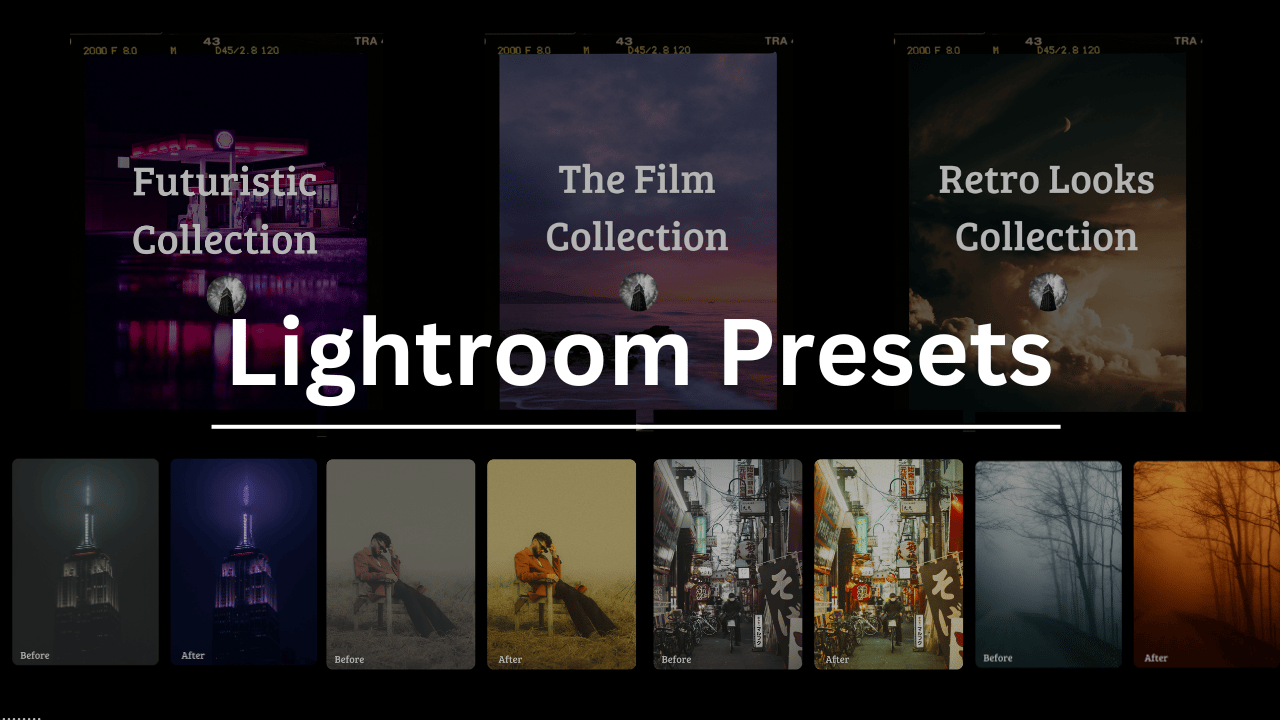
Download The World’s Best Lightroom Presets
Something You Have To Check Out
Free email without sacrificing your privacy

Gmail is free, but you pay with your data. Proton Mail is different.
We don’t scan your messages. We don’t sell your behavior. We don’t follow you across the internet.
Proton Mail gives you full-featured, private email without surveillance or creepy profiling. It’s email that respects your time, your attention, and your boundaries.
Email doesn’t have to cost your privacy.
Weekly Photo Technique Exploration
Welcome to a new section of the magazine where every week we will explore a new photography technique from across various photography genres.
This week’s technique: Whip Pan Photography

B&H

B&H
What Is Whip Pan Photography?
In cinema, a whip pan is a fast camera movement used to create a streaked, blurry transition between two scenes. In photography, the idea is very similar, however, instead of transitioning between shots, you are using a slow shutter speed combined with a quick camera movement to capture motion blur inside a shot.
The result is a photo that feels energetic and cinematic, where light stretches across the frame and the subject is frozen inside (just like you can see in the shots above).
How To Do It
Here is a quick guide on how to shoot a whip pan photo, step by step:
Dial In Your Ambient Exposure
Because motion is the whole point of a whip pan, shutter speed is your starting point. Begin by slowing your shutter until ambient light starts to register clearly.
Start around 1/10s to 1/2s
Adjust aperture and ISO afterward to fine-tune exposure
Keep ISO as low as possible while still exposing properly of course
Exact settings will depend on many things, including available light, time of day, how bright the background is, how much motion blur you want etc. so obviously adjust as needed ;)
Add Off-Camera Flash (Technically Optional, But Pretty Nice)
Adding an off-camera flash is not mandatory, but it gives you much more control, especially if people (as your subjects) are involved. Placing a flash behind or slightly off to the side of the subject does two important things → Nr 1. It creates a rim light that separates the subject from the background; Nr 2. It helps freeze the subject despite the slow shutter speed.
A Quick tip → if you want warmer skin tones at night, make sure to add a CTO gel to the flash. This lets you warm the subject while keeping the ambient background cooler.
Direct the Subject
Because the shutter will be open longer than usual, subject movement matters a lot. So, If you are photographing people, use a stable, simple pose + ask them to hold as still as possible → small movements will show up quickly at slow shutter speeds.
Capture a Clean Plate Shot
If you plan to composite later, this step is important.
Mount your camera on a tripod
Capture a clean, sharp photo of the subject
Use the same exposure and flash setup
Make sure nothing moves
→ This plate shot gives you a safety-net and allows for cleaner results when you later edit if needed.
Capture the Whip Pan Shot
Now for the actual whip pan.
Center your subject in the frame
Press the shutter
While the shutter is still open, snap/move the camera quickly left and right
Then stop the movement
The motion should be fast and directional. Avoid slow drifting, the ‘whip’ part comes from this sudden acceleration (that is literally why it is called → whip).
You can experiment with horizontal whips (which are most common), vertical whips (good for trees and buildings) and diagonal whips. Just try a few variations and see what works best.
Create the Composite in Post (If Needed)
If you shot a plate photo:
Stack the clean shot and whip pan shot in Photoshop
Mask the subject from the clean image
Blend it into the whip pan frame
Use soft masks to avoid hard edges
If you nailed it in-camera, you may not even need this step → the more you practice the better you will get at it too!
*advertisement (please check it out to support the magazine)
What’s next is almost here.

On July 16th at 1PM ET, beehiiv is going live with a look at the future of publishing, audience growth, and digital business.
What started as a newsletter platform has evolved into something much bigger: a place where creators and brands can grow, monetize, and own their audiences without stitching together half the internet to make it work.
The next chapter starts live at the Summer Release Event.
Join us to see what’s coming next.
The Rest of this Issue is for Premium Subscribers
