📸 The Magazine For Photographers - Bite Size
Read the Latest Photography News and Updates in the Creative Industry in 3-4 minutes or less ;)
In partnership with


Important Note: All photography articles are NOT sponsored
The Latest News:
AstrHori’s 9mm f/2.8 Ultrawide Lens Is Here

credits: AstrHori
AstrHori’s new 9mm f/2.8 APS-C lens is finally here. It is a fully manual ultra-wide lens for mirrorless systems including Sony E, Fujifilm X, Nikon Z, Canon RF, and Micro Four Thirds. With a 13.5mm full-frame equivalent focal length, it delivers a 111.4° angle of view, making it ideal for interiors, landscapes and cities. The lens has an all-metal build with a built-in petal-shaped hood to help reduce flare and protect the front element. It has a 62mm filter thread, which is relatively uncommon for lenses this wide, but adds much appreciated flexibility for using filters.
Inside, the optical design consists of 11 elements arranged in 8 groups, including one aspherical and two extra-low dispersion elements. That construction tries controlling distortion and chromatic aberration as much as possible. The aperture range runs from f/2.8 to f/16 and is formed by a 7-blade diaphragm, which helps maintain smooth bokeh even with the large depth of field typical of ultra-wide lenses. The minimum focusing distance is 7.8 inches (0.2 meters), allowing for close compositions while keeping most of the scene in focus.
The lens weighs about 10 ounces/307 grams in the Sony E-mount version. Being manual focus only, it relies on precise focusing control, and the focusing ring offers a long, smooth throw for accuracy. The AstrHori 9mm f/2.8 is priced at $169 in the U.S., €199 in Europe, and £179 in the U.K.
You can see full details and sample shots on AstrHori’s website here
Llano’s 4-in-1 CS2 Pro Charger

credits: Llano
Llano has introduced the CS2 Pro 4-in-1 Camera Battery Charger, a compact charging and storage hub for photographers that travel a lot and want to keep their gear simple and organised. It is designed to handle a few different jobs at once, namely charging batteries, working as a power bank, reading memory cards, and storing small accessories. The kit includes two 2600mAh Aurora batteries, a 10,400mAh built-in power bank, a 20W USB-C fast charger, and a USB 3.0 SD card reader, all packed into a small protective case.
The charger itself is relatively lightweight and portable, measuring five inches (about 12 cm) long and weighing about 12 ounces (around 350 grams). Llano says it can charge compatible camera batteries in around 90 minutes, about three times faster than a typical charger. The built-in power bank can also recharge cameras like Sony’s FX30 or A7 series roughly one and a half times, and it can top up smaller devices like phones or tablets.
There is also a USB 3.0 SD 4.0 card reader built into the case, supporting transfer speeds up to 312 MB/s. That means you can offload files straight to a laptop without carrying extra cables or adapters. The CS2 Pro also includes protection against overheating, overcharging, and short circuits. Llano offers versions for Sony, Canon, Nikon, and Fujifilm systems. Pricing is at $100 for the charger on its own or $160 for the full kit with two Aurora batteries.
Explore The World’s Best Photography Locations
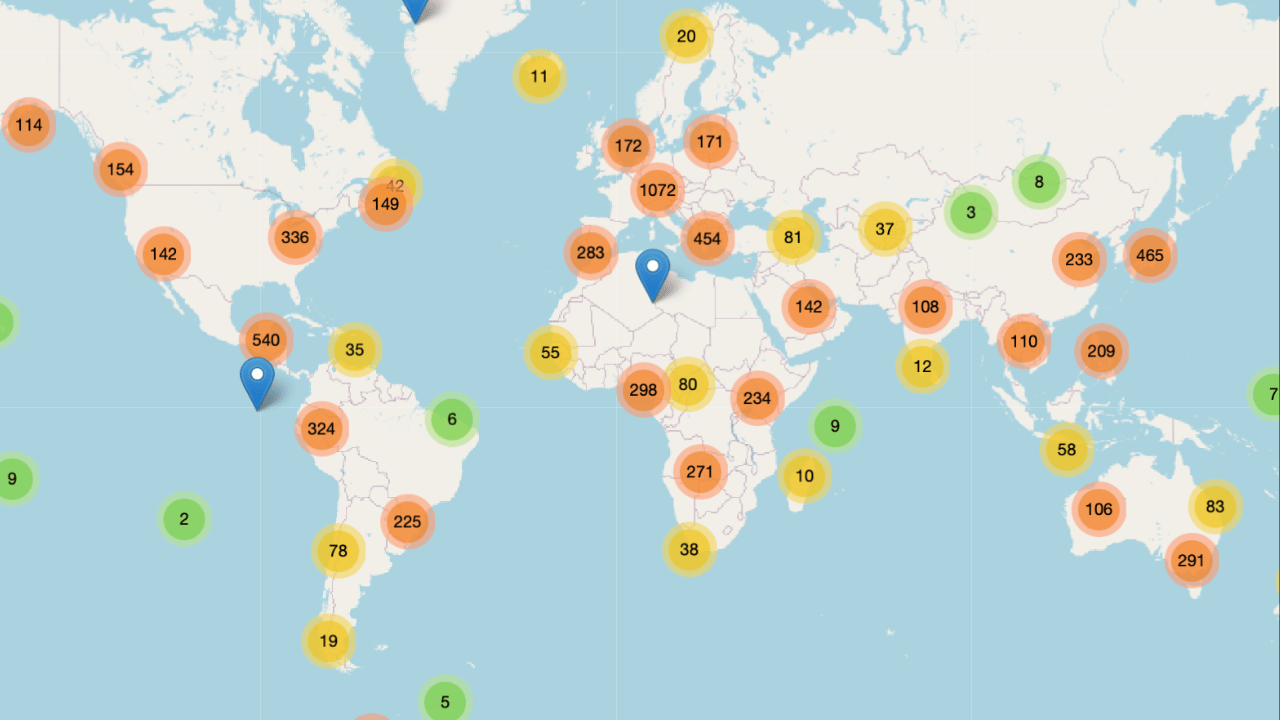
Get access to the world’s best photography location map - explore tens of thousands of amazing photo spots across the globe!
Something You Need To Check Out
Growing on Social Media, especially as a Photographer/Creative is hard. This is where Hubspot’s Social Media Playbook comes in. It includes thousands of strategies used by social media marketing experts that can help you boost your own social media presence.
Make sure to check it out ⬇️

Is your social strategy ready for what's next in 2025?
HubSpot Media's latest Social Playbook reveals what's actually working for over 1,000 global marketing leaders across TikTok, Instagram, LinkedIn, Pinterest, Facebook, and YouTube.
Inside this comprehensive report, you’ll discover:
Which platforms are delivering the highest ROI in 2025
Content formats driving the most engagement across industries
How AI is transforming social content creation and analytics
Tactical recommendations you can implement immediately
Unlock the playbook—free when you subscribe to the Masters in Marketing newsletter.
Get cutting-edge insights, twice a week, from the marketing leaders shaping the future.
Photo Analysis
Welcome to a new addition to the magazine: the photo analysis, where I will analyse a photo and talk about the composition, lighting what’s positive, what’s negative etc. so that you can learn and better your own photography from it ;)
This week’s photo by: Amogh
You can find him on Instagram as: @therealamogh

Let’s Analyse this Image:
Composition & Framing
What works well:
The leading lines are pretty good, the foreground tram rails pull you right into the photo and stretch all the way up the hill, giving the whole image an incredible sense of depth. They also create a strong visual flow.
The perspective is also very nice, you have that long, vertical stretch of the road disappearing into the distance, which gives the photo a very surreal/almost ‘‘impossible’’ look. It is definitely one of those shots that just feels like San Francisco (not just because of the cable car ;)).
Framing-wise, it is solid. The cable car sits right in the middle, working as an anchor while the rest of the scene happens around it.
In general there is a nice ‘‘rhythm’’ in the composition, so the repeating lines of the street, the tracks/cables, and the cars all give it a steady beat that keeps your eyes moving.
What could be better:
Shooting from a slightly lower angle could have exaggerated the leading lines even more, though to be fair doing so might have risked losing visibility of the street in the background, which is one of the best parts of this shot (so always take a few more options than you think, in the end you can always choose what works best).
The left side of the image feels just a bit heavier, between two driving cars right next to the cable car, that overhead street sign, and the trees in the distance, it is slightly more cluttered than the right. Not a dealbreaker of course, but it tips the balance slightly.
The darkened foreground hides some of the road texture that could have added a bit more of a ‘‘tactile’’ feel.
Light & Atmosphere
What works well:
The lighting feels really natural and well-balanced, it is giving late-afternoon city light where everything is still visible, but the headlights and taillights start to glow. All that makes it a touch more cinematic.
The subtle reflections on the tram rails (more prominent in the distance) are beautiful and help carve out the light in an otherwise relatively muted scene + it obviously exaggerates the leading line effect, helping to guide the viewer’s eye.
The atmosphere overall feels busy but not too chaotic, which fits the mood and light.
What could be better:
The shadows are a bit heavy in certain areas, especially on the sides of the background (and again a bit the foreground). Lifting them just a little would help bring back some texture and detail without ruining the mood.
The tram could use a touch more contrast or light (just a little bit though) since it is the natural focal point, but right now it blends slightly into the darker tones around it.
The car headlights on the left side are quite bright and grab too much attention. Toning those down in post would have helped keep the focus on the tram a bit more
Emotion & Story
What works well:
There is a strong sense of place, you can immediately tell that it is San Francisco —> the cable car, the landscape etc. which is great.
It sort of has that cinematic/postcard look but still feels ‘‘real’’, like you could have seen this with your own eyes.
What could be better:
Of course, here the story is more about the place than the people, it is atmospheric, but not emotional. Seeing a passenger in the window or a pedestrian on the side might have added a bit of ‘‘humanity’’ to the scene.
It is visually rich but narratively neutral, the photo shows/documents the moment but doesn’t tell us much beyond that. But again, this is not necessarily a bad thing, just depends on what you are going for.
Colour & Tone
What works well:
The colour grading is pretty good, clean, balanced, and not overdone. It feels true to life while still having enough mood/punch to feel cinematic.
The cable car’s warm tones pop relatively nicely against the cooler city. The soft reddish-brown sits perfectly in the middle of all the greys and blues and is warm but not over-saturated.
The subtle red of the tram lane/are adds an extra layer of visual harmony, tying the whole palette together (so the cable car doesn’t feel ‘‘out of place’’ with it’s colours so to say).
Overall, the tones are nicely restrained, nothing feels too harsh or overly processed, which I personally am a fan of.
What could be better:
As touched on before the headlights on the car to the left are too strong, they pull your eyes away from the main subject. Softening them would have helped the tonal balance.
Again, the shadows could be opened up a bit to reveal more detail on the street surface.
The colour palette, while cohesive, might benefit from just a bit more warmth overall, something to maybe tie in the cable car’s tones even more.
Balance
The left side is slightly heavier due to the cars there, street sign, and trees, but not so much that it throws the image off (it is honestly only when you REALLY look at it).
The red road markings in the foreground help balance out the visual weight of the left darker tones a bit which is nice.
Again, the depth and detail make the photo feel full without feeling too cluttered, there is a lot to look at, but it is sort of organised in a way that feels natural and easy on the eyes.
The Rest of this Issue is for Premium Subscribers
