📸 The Magazine For Photographers - Bite Size
Read the Latest Photography News and Updates in the Creative Industry in 3-4 minutes or less ;)
In partnership with


Important note: All photography articles are NOT sponsored
The Latest News:
Schneider-Kreuznach x Samyang’s New Lens

credits: Schneider-Kreuznach/Samyang
Just like they did at last year’s CP+ in Japan, Samyang and Schneider-Kreuznach used CP+ 2026 to show off another full-frame f/2.8 zoom. This time it is an AF 60–180mm f/2.8 for Sony E-mount and L-Mount. While full specifications have not been published yet, the lens was on display at the companies’ joint booth, giving visitors at least a physical look at what is coming. With this addition, the lineup now forms a slightly unusual but complete f/2.8 trio, 14–24mm, 24–60mm, and 60–180mm. That means photographers can cover 14mm all the way to 180mm at a constant f/2.8.
Based on hands-on impressions from the show floor, the 60–180mm looks relatively compact, especially compared to most 70–200mm f/2.8 lenses. It follows the same design language as the earlier 14–24mm and 24–60mm lenses, including the textured zoom ring. The front takes 77mm filters, and the minimum focusing distance ranges from 0.35 meters at the wide end to 0.78 meters at the long end. There is a physical AF/MF switch on the barrel, along with a zoom lock switch.
Beyond that, technical details remain limited. Pricing has not been announced, though the earlier lenses in this lineup sit around the $900–$1,000 range. It is also worth noting that in North America these lenses are sold under the Rokinon brand, even though they are otherwise identical to the Samyang versions. For now, the AF 60–180mm f/2.8 is simply listed as ‘coming soon’ for Sony E and L-Mount.
A New Canon Compact Camera?

credits: Canon
At CP+ 2026 in Yokohama, Canon gave one of its clearest signals yet that a new compact camera is in development. In an interview, Go Tokura, Executive Vice President and Head of Canon’s Imaging Group, said today’s compact camera buyers aren’t the same customers Canon used to serve. According to him, the next compact will need to bring “new technologies or a new use case” to the table. That is more direct than what we usually hear from Canon, which tends to stick to safe, non-committal answers about future products. This time, though, it sounds like something more deliberate is in the works.
Canon has not completely stepped away from compacts. The PowerShot V1 arrived with modern sensor and processor tech, but it is clearly meant more for video creators than photographers. What is still missing is a truly modern compact built first and foremost for photography That is where the rumours start to get interesting. Over the past year, there has been talk of a new model featuring a custom 24-megapixel sensor, reportedly larger than the typical 1-inch type (possibly around 1.4 inches) paired with a 16–50mm equivalent zoom lens. If accurate, that would give it noticeably more flexibility and image quality headroom than traditional pocket cameras.
None of this is confirmed, of course, but the direction makes sense. A larger sensor, a versatile zoom range, and updated processing could position Canon’s next compact as something more serious than a lifestyle gadget, while still staying smaller than a mirrorless setup. With Canon speaking more openly than usual, many expect we won’t have to wait too long to see what this new compact camera actually looks like, and 2026 seems like the likely window.
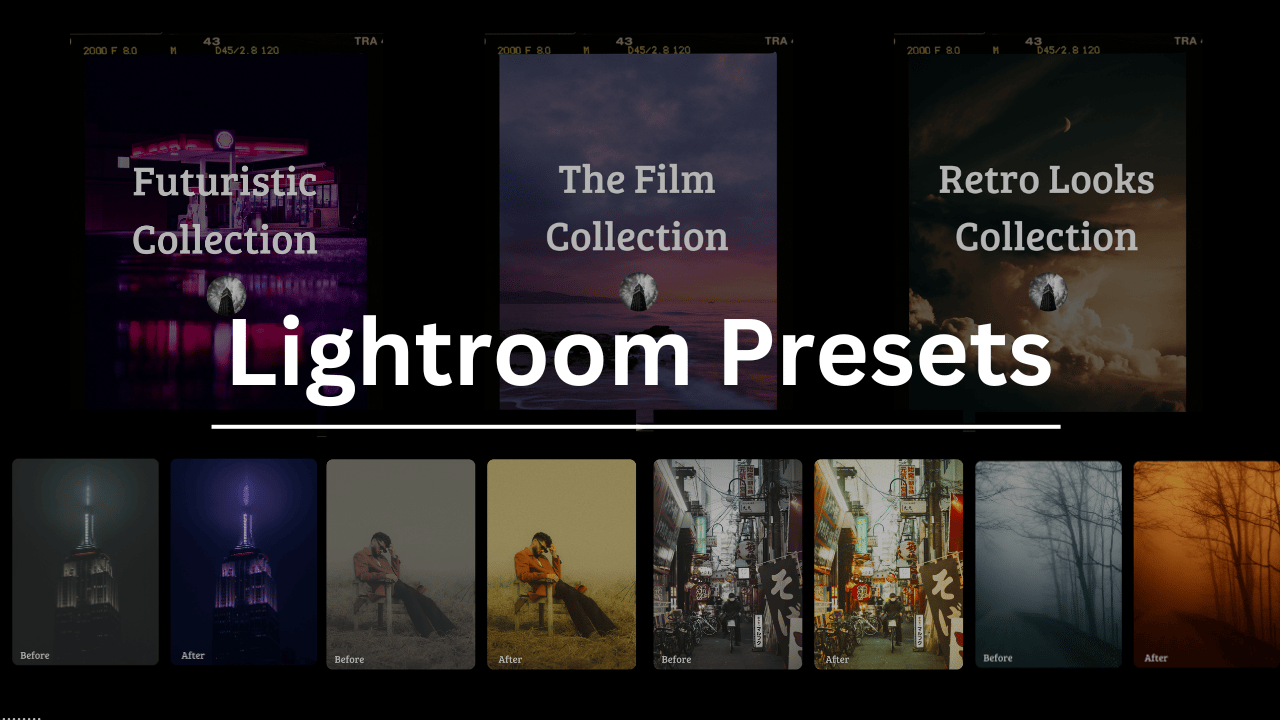
Download The World’s Best Lightroom Presets
Something You Have To Check Out
What do these names have in common?

Arnold Schwarzenegger
Codie Sanchez
Scott Galloway
Colin & Samir
Shaan Puri
Jay Shetty
They all run their businesses on beehiiv. Newsletters, websites, digital products, and more. beehiiv is the only platform you need to take your content business to the next level.
🚨Limited time offer: Get 30% off your first 3 months on beehiiv. Just use code JOIN30 at checkout.
Weekly Photo Technique Exploration
Welcome to a new section of the magazine where every week we will explore a new photography technique from across various photography genres.
This week’s technique: Tilt Shift Photography

Adobe

David McBee

DJI

Skylum
What Is Tilt-Shift Photography?
Tilt-shift photography is a technique that looks very technical (and it kind of is), but it opens the door to some really fun and surreal/cool effects, like turning a real-life city into what looks like a miniature toy town.
Originally, tilt-shift lenses were made for correcting perspective distortion, especially in architecture → keeping tall buildings from leaning backward, things like that. But creatively, you can use the lens’ unique movement to mess with focus planes and create selective blur. That is how you get that miniature effect.
What Does a Tilt-Shift Lens Actually Do?
A tilt-shift lens physically moves on two axes:
‘Tilt’ shifts the focus plane. Normally, focus falls parallel to your sensor. Tilt it, and the focus plane rotates. You can get a thin line of sharpness running diagonally or even horizontally through your image.
‘Shift’ moves the lens side to side or up/down, which changes how the image projects onto the sensor. This is what helps straighten out converging lines in architecture photography.
You can use either tilt or shift (or both together) to manipulate depth of field, perspective, or both at the same time.
The Famous “Miniature” Look
By narrowing your focus plane (and keeping it selective), you trick the eye into thinking it is looking at a macro scene. Add a high vantage point, a wide view, and some saturated colours, and the illusion is just perfect.
It works best when you are → shooting from above, using a wide aperture, composing a scene with small subjects (cars, people, building).
The blur at the top and bottom of the frame tells your brain: ok, this must be a model.
How to Shoot Tilt-Shift
1. Use a Tilt-Shift Lens
These are specialty lenses (down below I cover how you can fake the effect in photoshop too). Canon, Nikon, Sony, and others all make them. They are not cheap, but you can also rent one if you want to try before buying.
2. Compose from Above
If you are doing the miniature look, find a high angle, like a rooftop, balcony etc.. Cities, roads, parks, or construction sites all work as subjects.
3. Set Aperture Wide Open
You want shallow depth of field. Set your aperture around f/2.8 to f/4 to exaggerate the blur.
4. Tilt the Lens
Carefully tilt the lens downward or upward (depending on your camera/lens orientation) and watch the blur start to come in from the top and bottom. The more you tilt, the more extreme the effect becomes.
5. Fine-Tune Focus
Manual focus is your friend here. Focus on your "sweet spot" and let the rest naturally blur out.
Can You Fake It?
Yes! If you do not have a tilt-shift lens (or you simply do not want to buy or rent one), you can simulate the effect in post processing.
In Photoshop:
Open your photo (taken from a high angle).
Duplicate the layer and go to Filter > Blur Gallery > Tilt-Shift.
Adjust the blur lines and strength to control the in-focus strip and the blur above/below it.
Boost contrast and saturation a bit to enhance the effect.
Admittedly, it is not exactly the same, but it is close enough and great for experimenting.
The Rest of this Issue is for Premium Subscribers
