📸 The Magazine For Photographers - Bite Size
Read the Latest Photography News and Updates in the Creative Industry in 3-4 minutes or less ;)
In partnership with


Important note: All photography articles are NOT sponsored
The Latest News:
A New Retro Style Canon Camera?

The Canon AE-1 turns 50 in April 2026, and for a while now people have been expecting Canon to celebrate with a digital reboot inspired by the original film camera. The rumoured successor, the Canon EOS RE-1, pops up every few months, usually with nothing new, but this time there is finally something fresh, according to Canonrumors, multiple sources claim the RE-1 will use the 32.5-megapixel sensor from the EOS R6 Mark III. Earlier talk pointed to a 24-megapixel sensor, but that now seems like one of those early prototype guesses that didn’t hold up.
Canon already uses that 32.5-MP chip for the R6 Mark III and the EOS C50, so dropping it into another camera would make both financial and logistical sense. What is getting most of the attention, though, is the rumoured price positioning. The RE-1 is expected to land well below the R6 Mark III’s $3400 launch price. That is supposedly because Canon plans to trim some video features and use a less powerful DIGIC X processor, focusing more on the still-photo experience and the retro appeal rather than trying to make it a full hybrid workhorse. Canonrumors thinks Canon is aiming for something around $1,999, which would put it right in the same ballpark as the Nikon Zf.
As for when the RE-1 will actually show up, nothing solid has leaked. The obvious date would be the AE-1’s 50th anniversary in April 2026, and earlier rumours did point to a possible announcement sometime in the first quarter of that year. Canon is also expected to roll out a pair of retro-styled RF lenses alongside the body, which lines up nicely with everything else we have heard so far.
Viltrox’s Upcoming Conversion Lenses

credits: Viltrox
Viltrox is preparing to release two new conversion lenses designed for Fujifilm’s popular X100-series cameras. The company has started teasing them on its official Weibo page, and even though details are still thin, the images make it pretty clear what they are going for. These converters appear to mirror Fujifilm’s own TCL-X100 II telephoto attachment and WCL-X100 II wide converter, which are the standard options X100 shooters turn to when they want something other than the built-in 35mm-equivalent field of view.
If Viltrox is following Fuji’s recipe closely, we can expect the same focal length shifts, a 1.4× teleconverter that takes the X100’s 35mm-equivalent up to 50mm-equivalent, and a 0.8× wide converter that pulls back to an 28mm-equivalent. Fujifilm’s official versions are widely liked, but they are not cheap, both sit around the $400 mark, so it is easy to see why a more affordable third-party option might get plenty of attention.
Viltrox says the announcement is scheduled for December 10. Exact specs, pricing, coatings, and optical details aren’t confirmed yet, but as mentioned before, based on the focal length multipliers it seems safe to assume these will slot in as direct alternatives to Fujifilm’s official add-ons, likely at a much lower price.
You can see the official teaser photo on Viltrox’s Weibo page here
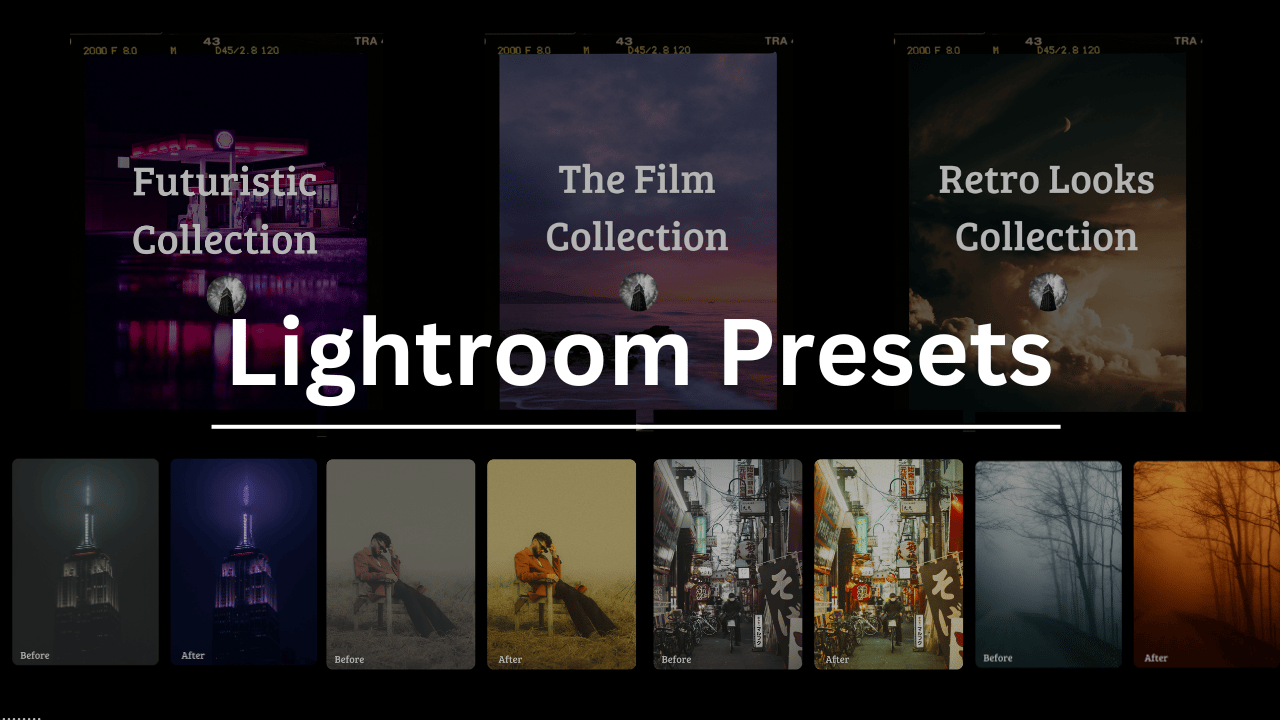
Download The World’s Best Lightroom Presets
Something Worth Checking Out
AI is something that most photographers/creatives see critically, and for absolutely good reason. HOWEVER the fact at the end of the day is that there sadly is no stopping AI, so the best thing you can do is learn how to use AI to your own advantage, whether that be with helping you with daily tasks, writing, editing, your day-job etc.
This is where ‘‘The Rundown AI’’ Newsletter comes in. It will teach you how to use AI to your advantage, increase your work efficiency (something every creative needs) etc.
Feel free to check it out, I read it myself (+ it is completely free) ⬇️
Learn AI in 5 minutes a day

This is the easiest way for a busy person wanting to learn AI in as little time as possible:
Sign up for The Rundown AI newsletter
They send you 5-minute email updates on the latest AI news and how to use it
You learn how to become 2x more productive by leveraging AI
Weekly Photo Technique Exploration
Welcome to a new section of the magazine where every week we will explore a new photography technique from across various photography genres.
This week’s technique: Zoom Blur Photography

Adam Welsh

Lynn Greyling
What Is Zoom Blur Photography?
Zoom blur is another very interesting technique that shares some similarities to panning photography (which we looked at last week). Zoom blur, lets you take a still scene and inject movement into it. However, instead of moving the camera through space (as you do in panning), you are changing your focal length while the shutter is open. The result is a stretched, tunnel-like effect that pulls everything toward (or away from) the centre of the frame. It is simple in concept, but there is a lot you can do with it.
The Idea Behind It
A zoom blur works because you are changing how the lens bends light WHILE the shutter is open. When you rotate the zoom ring mid-exposure → light spreads across the sensor differently frame-to-frame, edges stretch, lines become rays and depth gets exaggerated.
Camera Settings
Here is a setup that works almost anywhere outdoors, and gives you good control over how “streaky” the blur looks:
Shutter speed:
1/4s to 1 second if handheld
1–2 seconds if on a tripod (we are going to look at tripod vs. handled down below)
In essence → Longer shutter = smoother streaks. Shorter shutter = more chaotic burst effect.
Aperture:
f/8–f/16
You want/need depth because zooming mid-exposure magnifies softness.
ISO:
100–200
Focus:
Pre-focus manually on your main subject, autofocus tends to panic the moment you start zooming.
How to Do the Zoom Motion
As with panning, the movement matters more than the settings.
For smooth/clean streaks:
Start twisting your zoom ring the moment you hit the shutter
Move consistently (no sudden shakes)
Use your left hand to zoom while your right hand stabilises the camera (well I guess it depends on what your dominant hand is)
Follow through after the shot (do NOT stop instantly)
For more chaotic/punchy streaks:
Zoom fast at the start, then slow down
Or stay still for half the exposure, then zoom
Or zoom in, pause, and zoom again (gives sort of double ripples)
Two Main Styles of Zoom Blur
1. Zooming IN during the shot
So Start wide → zoom tighter
The photo will feel like it is falling into the centre
It pulls the viewer toward the subject
2. Zooming OUT during the shot
Start narrow → zoom wider
This will make it look like everything is exploding outward
Very cool with lights and night scenes in general
Tripod vs Handheld
Tripod Zoom Blur
If you want perfect linear streaks
Very symmetrical
Best for architecture
Looks more intentional, polished, ‘‘professional’’
Handheld Zoom Blur
Slightly messy look
Background warps unevenly
Really good for concerts but also street photography
Feels more “alive” and expressive, some might say even abstract
Some Generally Good Scenes/Shooting Ideas
Forests → tree trunks can become great radial lines
Architecture
Markets (like food markets for example) → colours sort of smear into abstract art
Concert lights (one of the best use cases)
Flowers
The Rest of this Issue is for Premium Subscribers
