📸 The Magazine For Photographers - Bite Size
Read the Latest Photography News and Updates in the Creative Industry in 3-4 minutes or less ;)
Sponsored by


Important note: All photography articles are NOT sponsored
The Latest News:
New Compact Lenses Incoming

credits: 7Artisans/Viltrox
It looks like compact lenses are becoming a much bigger focus for Chinese manufacturers again, with both 7Artisans and Viltrox apparently preparing a fairly large number of new releases. Recent leaks suggest 7Artisans is working on at least three new autofocus lenses, including an AF 10mm f/2.5 full-frame fisheye for Sony FE, an AF 18mm f/2 APS-C pancake lens, and an AF 10mm f/4, with the latter two currently appearing for Sony E-mount. Images circulating on Weibo and reports from Fujifilm rumour sites also suggest Fujifilm X versions could be coming as well.
What stands out is how much broader 7Artisans’ autofocus lineup is becoming. The company initially entered autofocus mostly through longer focal lengths like the recently released MAX AF 135mm f/1.8, but these new leaks suggest the focus is changing much more toward smaller, compact designs. Pancake lenses especially seem to be making a comeback recently as manufacturers continue pushing smaller mirrorless setups, and the rumoured 18mm f/2 fits directly into that trend.
Viltrox appears to have an even larger roadmap. The company has already discussed plans for nine new lenses covering full-frame, APS-C, and Micro Four Thirds systems. Among the rumoured releases are a compact AF 28mm f/4.5 for L-mount, an AF 35mm f/1.4 Pro with an aperture ring, a manual focus tilt-shift lens, and a compact AF 26mm f/2.8 that is expected to arrive first for Sony E-mount before expanding to L-mount later. Neither company has announced pricing or release dates yet, although Viltrox’s recent 35mm f/1.8 EVO and 55mm f/1.8 EVO currently sell for roughly $490 each, which at least gives some rough idea of where future compact autofocus lenses could end up.
ArcBlue’s C42 Astrophotography System

credits: ArcBlue
ArcBlue has announced the C42, a new astrophotography system that combines an interchangeable lens camera, motorised tracking system, onboard processing, and automated alignment into a single setup. Smart astrophotography systems themselves are not particularly new anymore, automated telescopes have been doing similar things for years, but ArcBlue is taking a slightly different approach by building the system around a larger full-frame sensor instead of a dedicated telescope design.
At the centre of the system is a 24-megapixel Sony IMX410 backside-illuminated full-frame sensor, a sensor that has already appeared in cameras from Sony, Nikon, Panasonic, Leica, and several others over the years. ArcBlue says the system also includes active TEC cooling, allowing the sensor to operate up to 30°C below ambient temperature, which helps reduce thermal noise during longer exposures. The camera also performs real-time image stacking, HDR processing, and onboard image processing directly inside the system, although RAW files remain available for those who prefer handling processing manually afterward. Since deep sky astrophotography usually involves stacking large numbers of photos, having some of that processing built directly into the system could simplify things quite a bit.
Unlike most smart telescopes, the C42 uses a native Sony E-mount, allowing you to use regular camera lenses or adapt telescope systems. ArcBlue says the system supports everything from ultra-wide lenses up to 2000mm telescope optics, while maintaining autofocus and electronic communication when using compatible lenses. The ArcBlue C42 is expected to launch ‘soon,’ although the exact pricing and timing have not yet been announced.
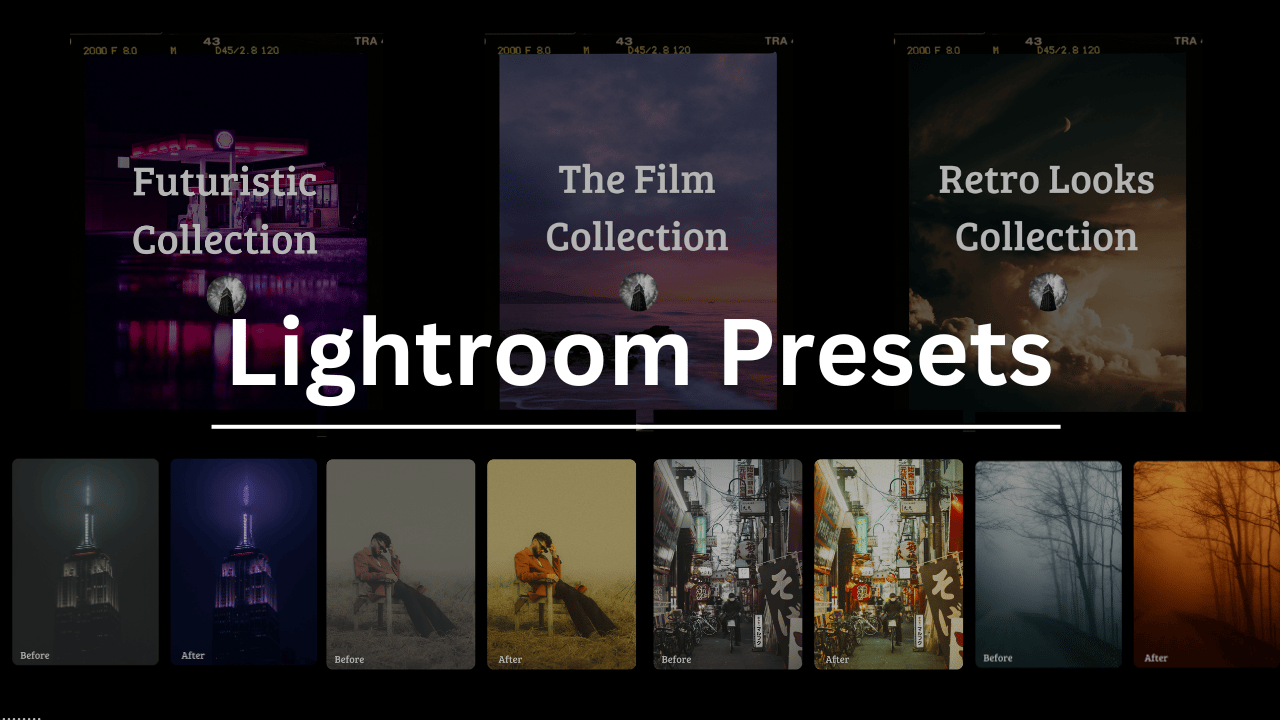
Download The World’s Best Lightroom Presets
Something You Have To Check Out
How Jennifer Aniston’s LolaVie brand grew sales 40% with CTV ads

The DTC beauty category is crowded. To break through, Jennifer Aniston’s brand LolaVie, worked with Roku Ads Manager to easily set up, test, and optimize CTV ad creatives. The campaign helped drive a big lift in sales and customer growth, helping LolaVie break through in the crowded beauty category.
Weekly Photo Technique Exploration
Welcome to a new section of the magazine where every week we will explore a new photography technique from across various photography genres.
This week’s technique: The Black Card Technique

Chuckage

Ready Rey

Fred Aldif

Zukiman Moham
What is the Black Card Photography Technique?
The black card photography technique is a very interesting concept, mostly because of its surprising simplicity once you understand how to do it. The idea is that instead of using an expensive ‘graduated’ ND filter to balance the exposure between sky and foreground, you use a matte black card to manually control how much light hits different parts of the frame during your exposure.
If you think about it, it is basically dodging and burning, but done in-camera while the shutter is open.
If you have ever worked in/been in a darkroom and used dodge and burn tools, this will feel very familiar. The big difference is that instead of fixing exposure after the photo is taken, as mentioned, you are doing it in real time.
Why This Technique Exists
Even with modern sensors, cameras still struggle with scenes that have a big dynamic range, especially landscapes.
So for example some typical situation would be:
→ The foreground needs a long exposure to look right
→ The sky blows out way before the foreground is properly exposed
Of course you could use HDR, shoot brackets or blend exposures later, however that means more time in front of a screen at home and less time actually shooting.
The black card technique tries to tackle that and lets you,
→ Capture a more balanced exposure in a single shot
→ Reduce the need for heavy editing later
→ Avoid carrying (and especially buying) multiple graduated filters
What You Need
You really do not need much:
A camera with manual controls
A sturdy tripod (We are doing long exposures after all)
A normal ND filter (commonly 6–10 stops)
A matte black card large enough to fully cover the front of your lens
—> That is it.
How the Black Card Works
The black card is used to block light from the brightest part of the scene, usually the sky, for part of the exposure. So, you are not blocking everything, only the area that would otherwise overexpose.
The idea is that the foreground needs a long exposure while the sky needs a much shorter one → So you expose for the foreground first, while temporarily shielding the sky. Then you remove the card and let the sky expose for the remaining time.
A Simple Example
Let’s say:
You are using a 10-stop ND filter
Your foreground needs 30 seconds
Your sky only needs 5 seconds
Here is what you want to do:
Set your shutter speed to 30 seconds
Start the exposure
Immediately use the black card to cover the sky
Gently move the card over the sky area for 25 seconds
After 25 seconds, remove the card
Let the sky expose for the final 5 seconds
The result is → Properly exposed foreground → Properly exposed sky → No blown highlights → And minimal editing later!
How to Measure Your Exposure
Here is an easy way on how to figure out your timings on location (it might seem a little complex at first but once you get it, it is easy, super logical and intuitive):
Switch to Aperture Priority
Turn on Live View
Use spot metering
Meter the brightest part of the scene (so the sky)
Note the shutter speed
Meter the darkest part of the scene (the foreground)
Note that shutter speed too
→ The difference between those two times tells you:
How long the sky should be blocked with the black card
And how long it should be exposed normally
Trust me, once you ave done this a few times, it becomes second nature.
Where This Technique Works Best
The black card technique works best when, the horizon is relatively flat or clean, the sky is significantly brighter than the land and if you want a natural-looking transition.
It is absolutely perfect for seascapes, lakes, flat coastlines, and generally open landscapes.
The Rest of this Issue is for Premium Subscribers
